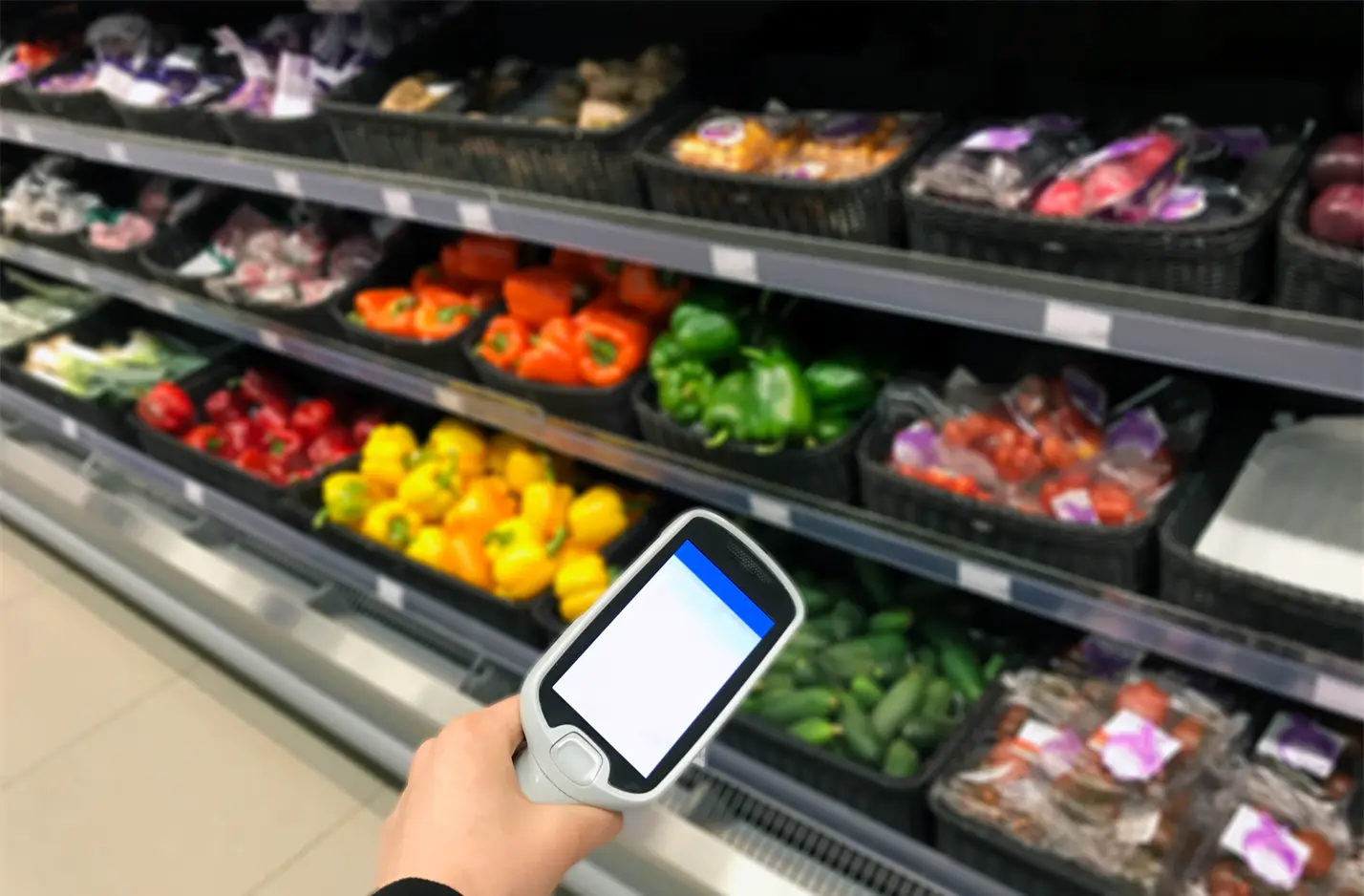
The retail industry is transforming rapidly. RFID in fresh food drives much of this change. After years of trials and technical challenges, RFID (Radio Frequency Identification) now enters one of the most complex sectors: fresh food. Walmart, has implemented RFID tags from Avery Dennison in meat, bakery, and deli categories. This initiative marks a major turning point for grocery retail.
This adoption improves more than technology. It enhances supply chain efficiency, reduces food waste, and strengthens product traceability. Retailers now see that integrating RFID from warehouses to store shelves, transform how they manage fresh products..
Why supermarkets are adopting RFID in fresh food
Supermarkets are adopting RFID in fresh food to tackle ongoing challenges in managing perishable and chilled products. Traditional barcode systems offer limited visibility and rely on manual intervention, causing stockouts, overstocks, and waste. RFID provides real-time, item-level tracking, supporting both operational efficiency and sustainability goals.
Key motivations behind RFID adoption
- Inventory accuracy: RFID gives real-time visibility of stock at the item level, reducing errors and preventing out-of-stocks situations.
- Shelf-life management: Retailers can track product expiry dates more precisely, improving rotation and reducing waste.
- Sustainability: Enhanced monitoring helps supermarkets meet environmental targets, including reducing food waste and limiting overproduction.
- Operational efficiency: RFID-driven automation reduces labor-intensive processes tasks, such as manual counting like manual counting, and boosts overall productivity.
For Walmart and other top retailer, these capabilities are not optional. They are essential to maintaining competitiveness in the fast-moving grocery sector.
RFID for fresh, perishable and chilled products
Despite its promise, RFID adoption in fresh products has historically faced significant challenges. Cold, humid environments and metallic packaging can interfere with radio signals, making reliable reads difficult. Avery Dennison has addressed these technical obstacles with advanced RFID tags designed for harsh conditions, enabling consistent performance in chilled and perishable categories.
RFID performance in cold and humid environments
These innovations let supermarkets track meat, cheese, bakery, and deli items accuracy. RFID tags now withstand refrigeration, humidity, and complex packaging, allowing retailers to monitor stock across the entire cold chain, from distribution centres to store shelves. This visibility guarantees product safety, quality, and traceability on a scale that was previously impossible.
RFID traceability and expiry date accuracy
Item-level RFID tracking provides complete traceability across the supply chain. Each tag contains a unique identifier linked to production data, batch, and expiry information, enabling real-time monitoring of product movement.
Item-level tracking in meat, bakery, and deli
For Walmart, deploying Avery Dennison’s RFID tags in fresh categories allows for precise expiry tracking, automated inventory checks, and proactive stock rotation. Products nearing expiration can be flagged for promotion or redistribution, reducing food waste and enhancing customer satisfaction.
This capability also supports Walmart’s goal of cutting food waste by 50% by 2030, demonstrating how technology can directly impact sustainability initiatives.
RFID in cold chain and grocery supply chain operations
While in-store applications receive significant attention, the true potential of RFID in fresh food lies in integrating the technology across the entire supply chain. From distribution centres to delivery trucks, RFID provides continuous visibility into every product, enabling faster decision-making and reducing errors.
By linking RFID data to warehouse management systems (WMS) and enterprise resource planning (ERP) platforms, supermarkets gain full inventory control, ensuring products are handled correctly and efficiently throughout the cold chain.
Reducing food waste with RFID visibility
Food waste remains a critical challenge for supermarkets. Estimates suggest that up to 10% of fresh products are discarded due to mismanagement or inaccurate inventory tracking. RFID transforms this scenario by enabling real-time monitoring of freshness and expiry, allowing stores to reduce waste proactively.
Automation also frees staff from labor-intensive tasks such as manual counting and inspection, allowing them to focus on value-added activities. This data-driven approach improves supply forecasting, supplier collaboration, and sustainability reporting, making food waste reduction with RFID a practical and measurable outcome.
Industry leaders driving RFID adoption
Avery Dennison’s RFID solutions have overcome key barriers in cold, humid, and metallic environments, making RFID for fresh and chilled products feasible at scale. Their technology supports high read rates and reliable performance across a variety of packaging types, setting the stage for widespread adoption.
Walmart’s RFID deployment in grocery
Walmart’s initiative is one of the largest in the world, potentially involving billions of RFID tags. By adopting item-level tracking for fresh products, Walmart demonstrates the transformative impact of RFID in fresh food, paving the way for other retailers to follow suit.
Automated warehouse RFID solutions for grocery
While store-level RFID is crucial, warehouse automation is where the technology delivers its highest return on investment. Clustag, a specialist in RFID for complex environments, has developed RFID tunnel systems capable of reading entire pallets or boxes of fresh products in seconds.
RFID tunnels for food processing
Clustag’s tunnels enable:
- High-speed mass reading of over 1.000 units per hour.
- Seamless integration with WMS and ERP systems for real-time inventory visibility.
- Error reduction in picking, packing, and dispatch.
- End-to-end traceability from production to store shelf.
With experience in both food and fashion retail, Clustag is well-positioned to help supermarkets scale RFID adoption, driving automation and efficiency across their supply chains.
The future of supermarket automation with RFID
Experts that RFID in fresh food is no longer a luxury, it’s a strategic necessity. Manolo Reguart, Director of Strategy and Business Development in retail technology, explains:
“RFID in fresh products is essential for efficiency, customer experience, and sustainability. Combining smart labeling with automated RFID systems like tunnels will reduce costs, improve inventory accuracy, and ensure food quality. Retailers who delay adoption risk falling behind”
The integration of RFID, automation, and data analytics is reshaping supermarkets. With Walmart, Avery Dennison, and Clustag leading the charge, the future of grocery retail is built on real-time visibility, reduced waste, and complete supply chain transparency.
See Clustag in action and transform your warehouse operations
Visit our Customer Experience Centre to see our solutions in action and experience firsthand the speed, accuracy, and traceability that Clustag can bring to your warehouse. Our RFID systems, including RFID tunnels and automated tracking solutions, are designed to handle complex environments with chilled, perishable, and packaged goods, ensuring end-to-end visibility across your supply chain.
By exploring our solutions in person, you will understand how RFID in fresh food can:
- Streamline order preparation and reduce errors.
- Optimize inventory management with real-time item-level tracking.
- Enhance traceability for perishable products, ensuring compliance and reducing waste.
- Integrate seamlessly with your existing WMS and ERP systems for a complete digital workflow.
To see how our RFID solutions can be tailored to your specific operations, fill out our contact form and one of our experts will guide you through a personalized demonstration. This interactive session will provide practical insights into how Clustag can accelerate your warehouse automation, improve accuracy, and boost operational efficiency.
Don’t miss the opportunity to optimize your warehouse processes, enhance food safety, and elevate your oder preparation to the next level.