
Reverse logistics has become one of the biggest black holes in modern ecommerce. While commercial teams push massive campaigns and promotions the reality in the warehouse moves at a different pace: thousands of products are returned every day, and most take too long to be restocked and made available online. Implementing RFID returns processing with Inbound Verification and RFID for returns can help close this gap, ensuring returned items are quicky visible online and reducing lost sales.
This gap is especially critical in premium fashion, where top-selling items have very short sales cycles. Clara’s story illustrates how slow returns processing can turn a physical available product into a lost online sale.
Slow returns processing and delayed restocking
Madrid, December 12th.
Clara knew exactly what to give for Christmas: a limited-edition camel jacket she had seen weeks earlier on her favourite brand’s website. After Black Friday, it appeared as “sold out”. But she trusted that typical December returns would make it available again.
What Clara didn’t know was that the jacket she wanted had already been returned to the warehouse on December 9th. However, it hadn’t been processed yet. The warehouse used a manual returns processing workflow: opening the package, validating the label, checking condition, re-tagging, updating systems. During the post-Black Friday surge, this process took 72 hours.
On December 11th, Clara checked the website again. It was still sold out. With Christmas approaching, she bought an alternative from another brand.
For her, it was just a practical decision. The company, however, lost a sale. Meanwhile, the competition gained a customer.
The impact of stockouts during peak season
These situations are not exceptions; they are constant during peak periods. For a premium fashion brand with a strong online channel, the impact is huge:
- Approx. 10.000 returns between Black Friday and Christmas
- 40% are high-rotation items
- Average price €90
Sales that never happen, because the item is in the warehouse but not online, represent €540.000-€720.000 in lost revenue over three weeks.
This is not a commercial failure or poor planning: it is an operational problem. And this is where RFID returns processing and RFID reverse logistics make a difference.
How returns processing affects online stock availability
Before diving into solutions, it is important to understand how the returns process itself affects online stock availability. Most traditional systems create a time gap between what exists physically and what is shown digitally. This gap is the root of “phantom sales” that never happen.
Out of stock due to returns
When a return takes days to be restocked, the e-commerce marks the item as sold out. This hides hundreds of items from customers that are physically in the warehouse. A delay of 48 and 96 hours can make the difference between selling a product or losing it forever to the competition.
Customer frustration is evident, but the economic impact is even greater: an invisible product is an unsellable product.
Inventory visibility issues
Additionally, manual workflows create other critical problems:
- Discrepancies between physical and digital inventory
- Distorted demand forecasts
- Inefficient replenishment
- Overproduction to cover perceived “out of stock” that is not real
The result is a less competitive ecommerce and higher operational costs. The solution is not more stock, but better inventory visibility, which RFID returns processing enables.
What RFID brings to reverse logistics and returns processing
To bridge the gap between the warehouse and ecommerce, brands are adopting item-level RFID, especially in the returns workflow known as Inbound Verification. This technology transforms a slow operation into a reliable, fast, and automated process.
RFID returns processing explained
With RFID, each item has a unique identifier. In a return, the system can:
- Read the item without handling it
- Validate its authenticity
- Check category, size, and price
- Detect anomalies or fraud
- Update stock in seconds
The key difference is that everything happens automatically, reducing errors and accelerating product availability through automated returns processing.
Automated vs manual returns workflows
The contrast between the two approaches is clear:
Manual
- 3-5 minutes per item
- 48-72 hours for restocking
- Labor-intensive
- Frequent errors
- Delayed e-commerce updates
RFID with Inbound Verification (Clustag):
- Process completed in seconds
- Restocking in less than 6 hours
- No package opening
- No human errors
- Stock updated almost in real time
The result is clear: a product is back online the same day it arrives at the warehouse.
RFID tunnel solutions for high-speed returns handling
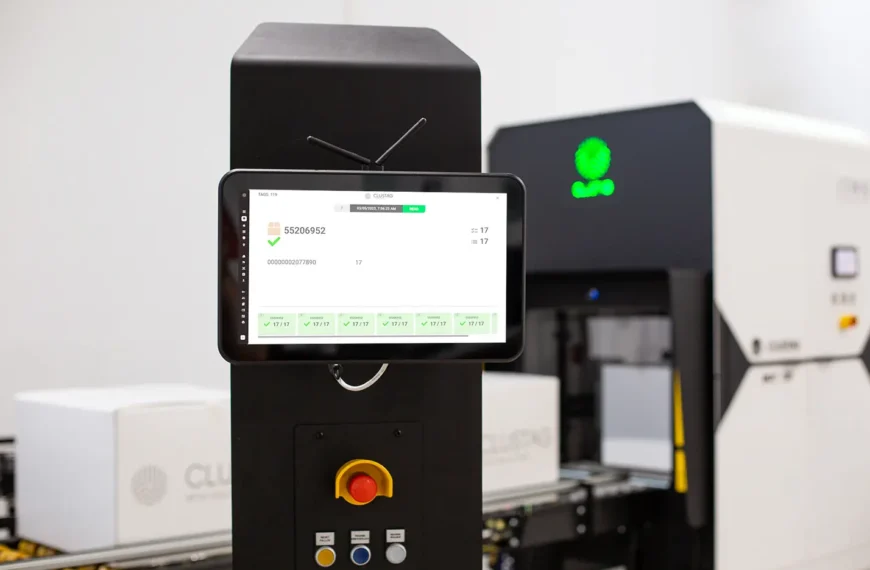
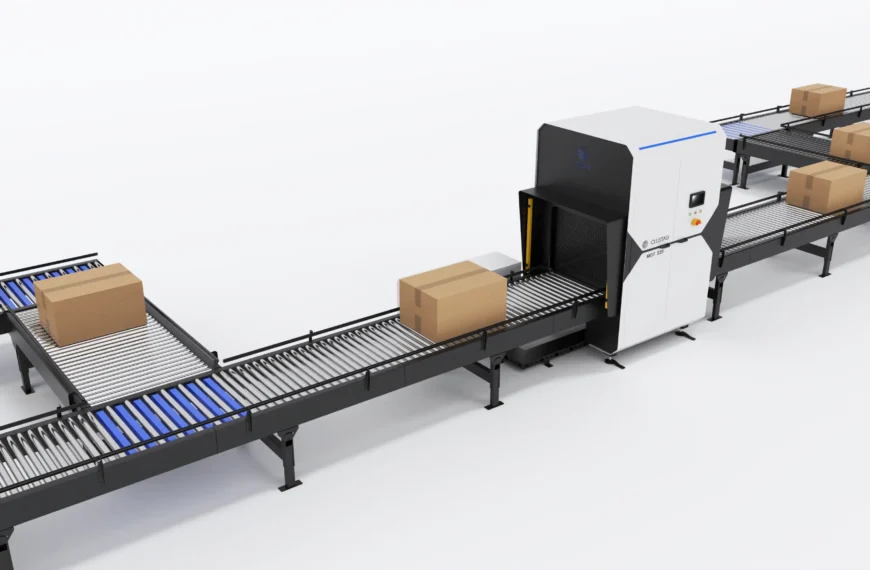
The use of specialized RFID tunnels enables this speed to become a reality. Solutions like those offered by Clustag automate returns validation and eliminate almost all manual handling.
How RFID tunnel reading accelerates reintegration
The process is simple for warehouse staff but powerful for the brand:
- The returned box is placed in the tunnel.
- The system reads all RFID tags simultaneously (RFID tunnel reading).
- It validates authenticity and SKU matching
- It detects any discrepancies.
- Stock is updated automatically.
These massive reads, hundreds per minute, reduce restocking time from 72 hours to just 6.
This cuts typica sales losses of 15-20% to 2-3%, potentially recovering up to €600.000 during peak campaigns.
How RFID prevents stockouts in fashion and e-commerce
Availability is key to online performance. An e-commerce that reflects in real time what happens in the warehouse can capture sales that would otherwise be lost.
How item-level RFID prevents stockouts
Full inventory visibility allows:
- Returned items to be restocked the same day
- Stock balance between stores and online
- Prevention of apparent stockouts (stockouts e-commerce)
- Maximized ecommerce conversion
- Reduced safety stock needs
Reliable inventory equals profitable inventory.
Reducing lost sales with RFID
The most direct benefit of reducing lost sales with RFID is recovered sales:
- More availability = more conversion
- Fewer OOS (out-of-stock) = fewer lost sales to competitors
- Greater accuracy = less overproduction
As Ferran Bodí, Clustag’s RFID manager, summarizes:
“During critical campaigns, every minute counts. RFID turns returns into opportunities, not losses.”
Peak season pressure: Black Friday and Christmas as stress tests
Black Friday and Christmas are the critical weeks when a brand is truly tested. High demand and a surge of returns put reverse logistics to the rest: if return processing fails, lost sales multiply and customer experience suffers.
During these periods, every minute matters. A 48–72-hour delay in restocking can mean returned items are not visible when customers want to purchase them. This not only frustrates customers but directly impacts revenue, diverting sales to competitors.
RFID for Christmas peak season
RFID technology changes the rules. With automated return reading, items can be restocked in hours, not days (RFID for Christmas peak season), keeping them available online even during peak season.
In Clara’s case, the story would have been very different: the jacket she wanted would have returned to stock on December 9th, and she would have seen it available on December 11th. The sale would have been completed, her experience would have been positive, and the competitor would not have gained a customer. This example shows how RFID returns processing ensures that every return can become a sales opportunity rather than a loss.
ROI of RFID in reverse logistics
Beyond improving stock availability and customer experience, implementing RFID reverse logistics delivers clear, measurable financial returns, especially in fashion and e-commerce.
Key benefits include:
- Recovered sales because returned items become immediately visible online
- Reduced labor in manual verification and restocking processes
- Reliable inventory with fewer discrepancies between physical and digital stock
- Fraud and grey market prevention, ensuring item-level traceability
- Optimized stock across the networks, avoiding overproduction or unnecessary purchases
As Clustag point out:
“Item-level traceability not only prevents errors, but it also stops fraud and the grey market.”
Thanks to these advantages, most implementations achieve ROI in less than 12 months, showing that investing in RFID not only improves operations but protects and increases sales during critical campaigns.
Turning returns into opportunities with Clustag
After implementing RFID and achieving measurable ROI, the next step is turning every return into a real sales opportunity.
With Clustag’s RFID technology, brands can:
- Process returns in seconds instead of days (automated returns processing)
- Update online inventory almost immediately
- Reduce apparent stockouts and lost sales
- Improve customer experience by ensuring the product they want is available
Each returned item can become a sales opportunity rather than a loss
Discover how Clustag can transform your returns management and ensure your products are always available to your customers.
Visit our Customer Experience Centre to see our solutions in action and experience the speed, accuracy, and traceability that Clustag can bring to your warehouse. To explore how our RFID solutions can be tailored to your specific needs, fill out our contact form and one of our experts will guide you through a personalized demonstration. Don’t miss the opportunity to optimize your warehouse processes and take your order preparation to the next level.
See how RFID technology speeds up your reverse logistics.