Category: Outbound Verification

  • How an RFID Gate Portal Streamlines Outbound Logistics

    How an RFID Gate Portal Streamlines Outbound Logistics

    In high-volume facilities, the difference between a smooth operation and a loading dock bottleneck often comes down to a matter of seconds. An RFID Gate Portal enhances outbound logistics by making loading processes faster, more predictable, and significantly more efficient.

    “By automating the verification of pallets and shipments, we maintain a continuous operational rhythm while eliminating the manual friction that leads to costly bottlenecks.”

    Through our experience in industrial intralogistics, we have engineered a solution that protects productivity during peak seasons without adding complexity to the operator’s routine.

    Speeding Up the Pace of Outbound Operations

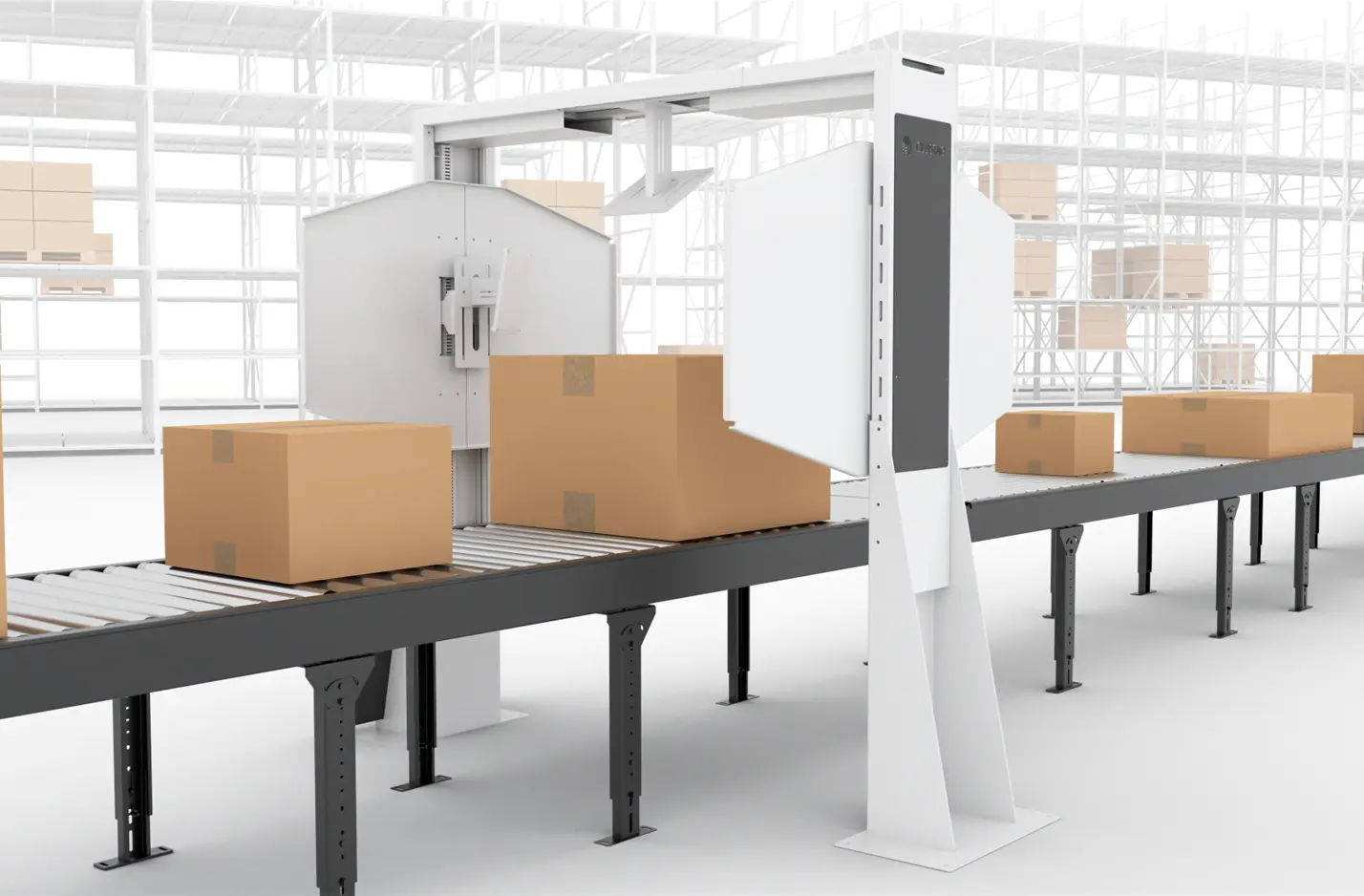
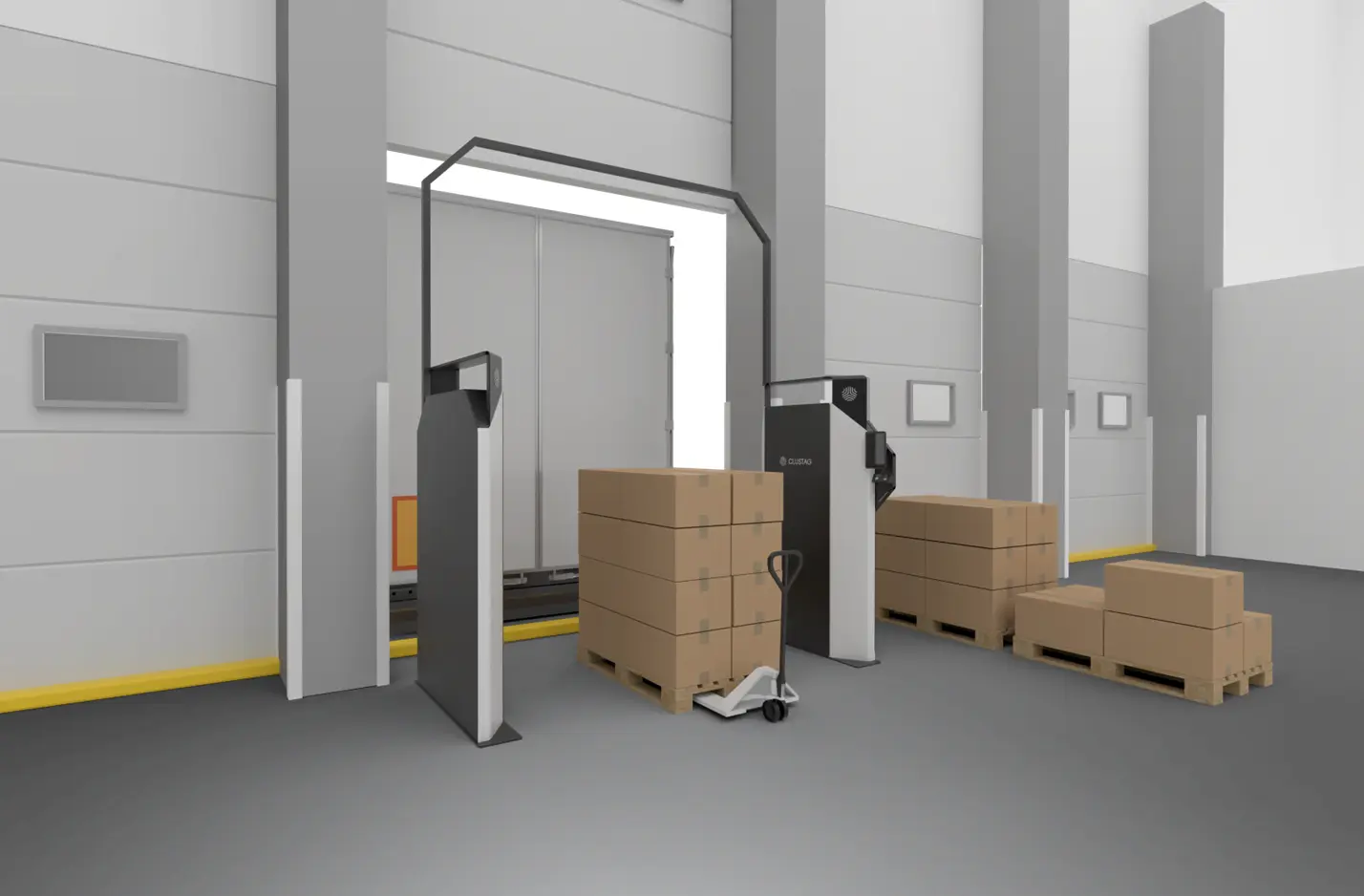
    When outbound activity intensifies, teams need systems that maintain momentum without compromising control. The RFID Gate Portal confirms pallet composition directly at the loading dock, ensuring every order is ready to leave the facility.

    • Zero-Touch Validation: Confirm outbound loads instantly without stopping for manual scans.
    • Continuous Flow: Operators maintain their natural workflow using forklifts or pallet jacks.
    • Accelerated Turnaround: Reduced loading times mean trucks leave on time, every time.

    Enhancing productivity with continuous flow control

    Maintaining a smooth operational flow requires a delicate balance between accuracy and speed. Our RFID Gate Portal has been engineered to support high-throughput environments while providing clear, real-time feedback.

    Performance Breakdown: Manual vs. Automated Outbound

    FeatureTraditional Manual CheckRFID Gate Portal Solution
    Verification SpeedSlow (item by item)Instant (full pallet in motion)
    Error MarginHigh (human error)Minimal (automated verification)
    Operator FeedbackDelayed / Paper-basedReal-time visual signals (Beacons)
    Congestion RiskHigh at loading docksSignificantly reduced

    Driving performance through engineered design

    To support operational speed, the RFID Gate Portal integrates industrial‑grade components that ensure stability, durability and easy serviceability. This reduces downtime and allows facilities to maintain high availability during critical outbound windows.

    Built for high‑volume, industrial environments

    With heavy‑duty steel construction, wide pallet‑size compatibility and temperature‑resilient specifications, the system is designed to withstand the intensity of dock activities without loss of performance. This makes it a dependable asset for distribution centers, manufacturing plants and 3PLs that move large volumes daily.

    Integrating seamlessly into existing workflows

    The portal fits into manual loading processes without requiring changes to operator routines. Its design allows teams to continue using forklifts, pallet jacks or manual handling tools in a familiar way, while the system captures and validates data automatically. This balance between automation and operational flexibility enhances overall productivity without disrupting current methods.

    Boost outbound speed with the RFID gate portal, streamlining loading‑dock workflows and reducing manual checks.

    Empowering teams with real‑time accuracy

    By delivering accurate reads in real time, the RFID Gate Portal gives supervisors and control room teams immediate visibility over outbound execution. This allows faster decision‑making, earlier detection of anomalies and better alignment between WMS data and physical movement.

    “Accuracy at the final stage of the operation is your best defense against claims, rework, and expensive reverse logistics costs.”

    Every time a pallet passes through the portal, our Zentup data intelligence platform validates the load against the shipping order, ensuring that only the correct units reach the trailer.

    Take Control of Your Loading Dock

    The RFID Gate Portal isn’t just a piece of hardware; it’s a strategic asset for distribution centers and 3PLs that move large volumes daily. By combining Smart RFID Intralogistics with rugged industrial design, we help you master your outbound flows.

    Ready to boost your outbound speed and accuracy? We invite you to visit our Customer Experience Center to see the RFID Gate Portal in action with your own pallets and products.

  • Beyond Cycle Counts How Always on RFID Is Transforming Inventory Accuracy in Warehouses

    Beyond Cycle Counts How Always on RFID Is Transforming Inventory Accuracy in Warehouses

    Achieving rfid inventory accuracy is becoming essential for every logistics operation that demands real time visibility, seamless traceability and higher fulfillment performance. As warehouse complexity increases and customer expectations accelerate, we cannot afford delays, blind spots or manual counting processes that interrupt workflows and create inconsistent data. With Clustag’s RFID intralogistics ecosystem, we elevate inventory management to a continuous, automated and highly reliable process that empowers us to operate with precision at every movement of the product.

    Elevating warehouse operations with RFID inventory accuracy

    Ensuring rfid inventory accuracy allows us to move from periodic cycle counts to uninterrupted visibility. When inventory data remains updated throughout inbound, outbound and picking activities, we eliminate operational inefficiencies and unlock a new level of responsiveness.

    Replacing manual cycle counts with continuous RFID visibility

    Manual cycle counting consumes time, resources and disrupts operations. By deploying Clustag’s RFID tunnels, MOT Stations and AS/RS integrated read points, we achieve automated item level reading that updates records instantly. These systems capture hundreds or even thousands of tags in seconds, enabling nonstop verification without slowing conveyors or teams on the floor.

    Strengthening data quality through controlled reading environments

    Our solutions are engineered with mechanical shielding that isolates the reading area, preventing stray reads and ensuring precise EPC detection. This design guarantees consistent rfid inventory accuracy throughout high volume processes, from inbound reception to outbound validation.

    Improving operational flow through real time synchronization

    ZENTUP, our RFID data platform, ensures that every read is validated and transmitted in real time to WMS, ERP or WCS systems. This constant synchronization minimizes discrepancies, streamlines root cause analysis and enhances decision making across the warehouse.

    Enhancing logistics processes through accurate RFID data

    Building rfid inventory accuracy into daily operations improves performance in every stage of the warehouse. Our ecosystem is adaptable to automated systems, manual workflows and high speed conveyor environments.

    Streamlining inbound verification

    Inbound operations benefit greatly from automated content checks. With our RFID tunnels and read points, we validate quantities, detect encoding issues and prevent supplier errors before they impact stock availability. This accuracy strengthens downstream picking and shipping processes.

    Accelerating picking workflows with real time item insights

    Whether in shelf to person, person to good or ASRS environments, instant item level visibility enhances picking efficiency. Operators confirm item correctness without manual scanning, reducing exceptions and improving throughput.

    Securing outbound accuracy and reducing costly returns

    Outbound control becomes more reliable when shipments are validated automatically. Our stations verify carton and pallet content with high accuracy, helping prevent mispicks, chargebacks and customer dissatisfaction. With rfid inventory accuracy as a baseline, fulfillment becomes faster and more consistent.

    Building sustainable and resilient warehouse operations through RFID inventory accuracy

    Real time RFID visibility not only optimizes day to day operations but also supports long term efficiency and sustainability initiatives.

    Reducing operational waste and unnecessary movements

    Every incorrect shipment or inbound discrepancy adds avoidable labor, transport and energy consumption. Accurate RFID data minimizes rework and prevents inefficiencies from escalating through the supply chain.

    Ensuring long term reliability through robust electromechanical design

    We design and manufacture our hardware in house, ensuring durability and performance in demanding industrial environments. This engineering approach guarantees that rfid inventory accuracy remains consistent across continuous high speed operations.

    Supporting end to end traceability across the supply chain

    From source tagging to last mile delivery, RFID delivers a continuous view of inventory. With accurate data driving forecasting, replenishment and fulfillment strategies, we help companies meet service levels while reducing operational risks.

    Transforming warehouse intelligence with RFID inventory accuracy

    As warehouses evolve toward higher automation and real time operations, achieving rfid inventory accuracy becomes the foundation for resilient, efficient and scalable logistics. Our RFID intralogistics ecosystem enables companies to work with confidence, speed and traceability at every stage of material flow.

    We invite you to experience our RFID solutions firsthand at our customer experience center. Bring your own products and validate how our technology performs under real operating conditions. You can also contact us through our form and we will help you shape the ideal roadmap toward real time, automated warehouse visibility.

  • RFID vs Barcode: Which Is Better for Inventory Accuracy?

    RFID vs Barcode: Which Is Better for Inventory Accuracy?

    We operate in a landscape where supply chains move faster than ever, and real-time visibility has become a competitive advantage. Businesses across retail, logistics, and manufacturing rely on identification systems that reduce errors, minimize manual effort, and support scalable digital operations.

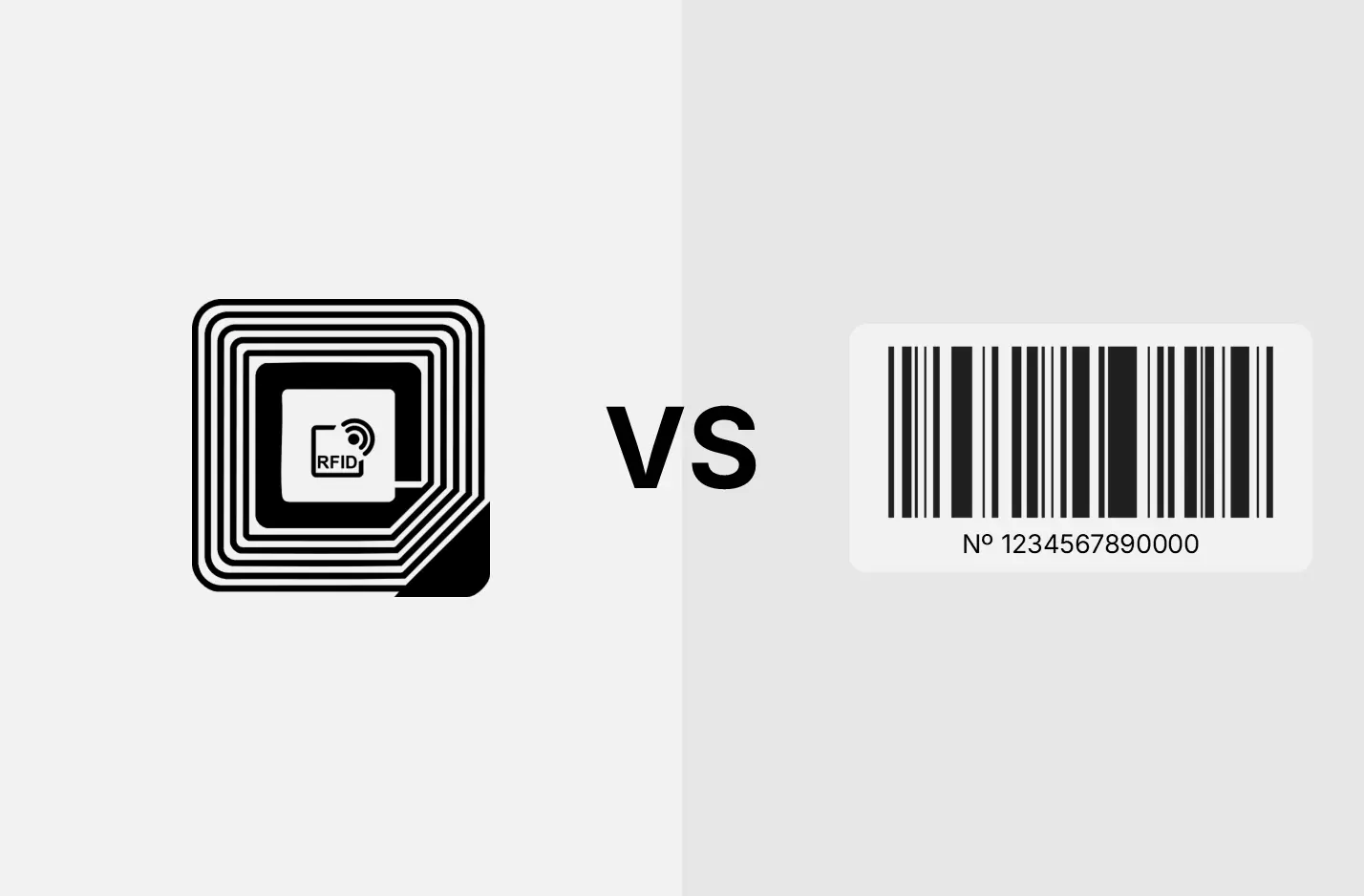
    As operational complexity increases, many organizations begin evaluating RFID vs Barcode to determine which technology better supports modern inventory management and accuracy requirements.

    If you are looking to strengthen inventory control and streamline workflows, understanding how these technologies compare is essential.

    Understanding how identification technologies impact operational accuracy

    Selecting the right identification method directly influences how efficiently teams can manage stock, validate shipments, perform cycle counts, and maintain end-to-end traceability.

    Both barcode and RFID technologies are widely used across warehouses, stores, and distribution centers. However, their capabilities differ significantly when accuracy, speed, and automation are priorities.

    Inventory visibility improvements

    RFID enables real-time item recognition without requiring line-of-sight scanning. This allows teams to capture data automatically and perform inventory checks with minimal operational disruption.

    With RFID, organizations can:

    • Complete cycle counts in minutes
    • Detect discrepancies immediately
    • Maintain continuous visibility of item movements

    Barcode-based counting depends on manual scanning. Each label must be visible and individually captured, increasing processing time and the risk of missed items.

    Error reduction and operational consistency

    Manual barcode workflows introduce variability into daily operations. Even experienced operators may encounter missed scans, fatigue-related errors, and inconsistencies.

    RFID systems reduce human intervention through automated reading. Multiple items are detected simultaneously, improving reliability across inbound validation, outbound verification, and audit processes. The result is a more stable and predictable operational environment.

    Speed of execution

    Execution speed plays a critical role in maintaining accurate inventory data.

    RFID technology supports batch or mass reading, allowing hundreds of items to be identified in seconds. Faster data capture enables more frequent checks and validation processes. Barcode systems require sequential scanning, meaning each item must be processed individually. In high-volume environments, this constraint can significantly limit throughput.

    Practical considerations when choosing between RFID and Barcode

    Evaluating RFID and barcode technologies requires analyzing how each system performs within a specific operational context.

    Reading environment and performance factors

    RFID performance can be influenced by materials such as metal or liquids. Well-designed RFID systems mitigate these challenges through shielding techniques, controlled read zones, and optimized hardware configuration.

    Barcode labels remain dependable but rely on clear visibility, correct orientation, and physical access for scanning.

    Integration and workflow compatibility

    RFID integrates naturally into automated workflows, including conveyor systems, packing stations, receiving docks, and tunnel validation systems.

    Barcode systems are simpler to deploy initially but less scalable when operations demand multi-item validation, high-speed automation, or real-time tracking.

    Investment and ROI expectations

    Barcode solutions offer a low-cost entry point and remain effective for basic workflows. RFID deployments typically involve a higher initial investment but deliver long-term value through labor reduction, accuracy improvements, and process automation. Organizations increasingly evaluate identification technologies based on operational impact and scalability.

    How Clustag enhances RFID identification and accuracy

    Clustag Smart RFID Solutions are designed to deliver reliable and high-precision identification across retail and logistics operations.

    By combining advanced hardware with intelligent software, Clustag systems ensure consistent read performance even in complex environments.

    Enhanced accuracy across retail and logistics

    Clustag validation surfaces and RFID tunnel systems support seamless inbound checks, shipment verification, and product authentication. Near-field reading and isolated scanning environments help ensure every item is captured correctly, even when products are densely grouped.

    Optimized operator efficiency

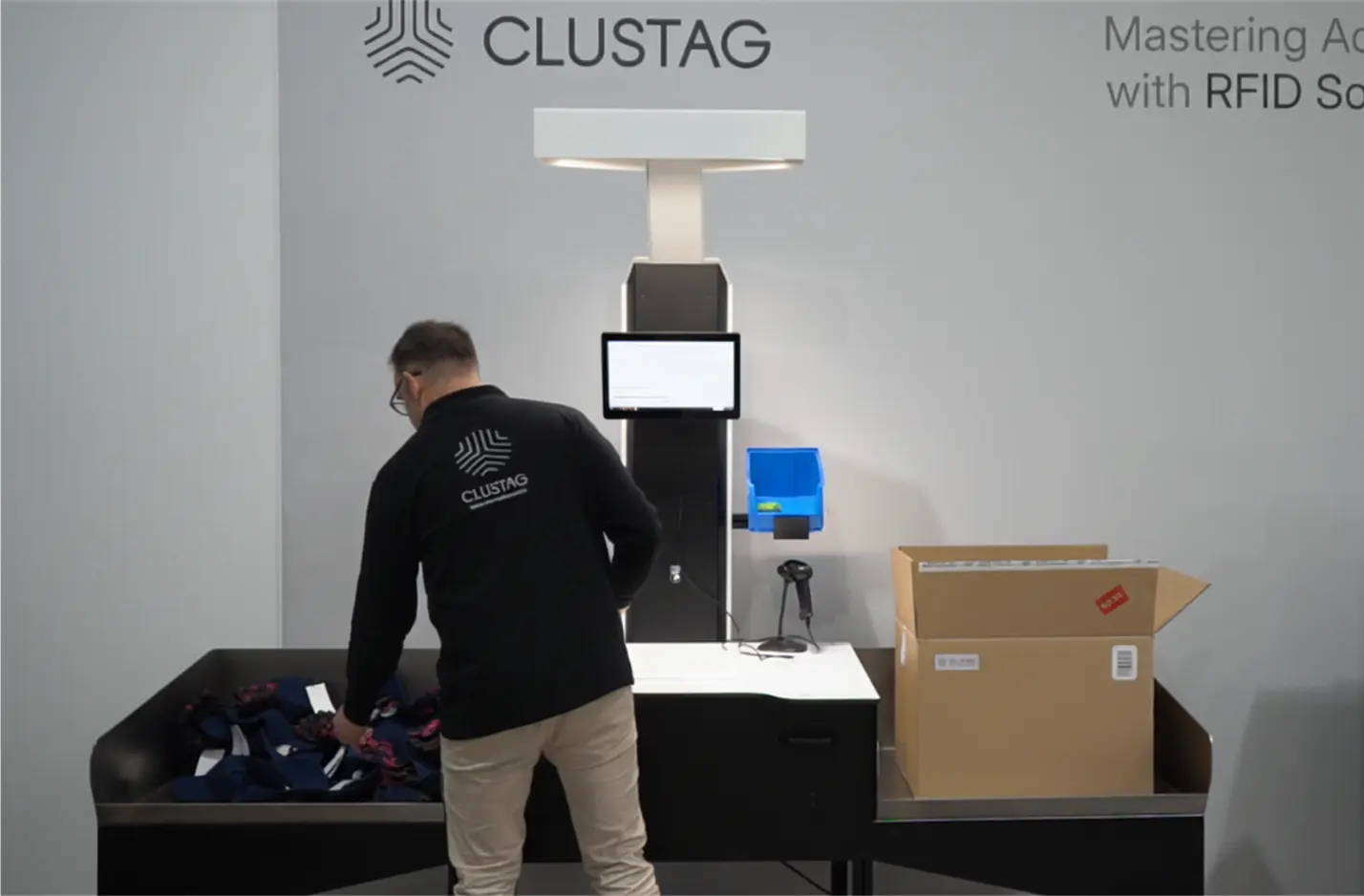
    Clustag interfaces are designed to simplify validation tasks for warehouse and store teams. Clear visual feedback and guided workflows reduce training time while improving process consistency.

    Scalable technology for evolving operations

    RFID-enabled infrastructures allow organizations to expand validation points, integrate automation, and extend tracking capabilities as operational needs grow. RFID becomes a strategic foundation for long-term supply chain optimization.

    RFID vs barcode: making the right decision

    Barcode technology remains effective when operations are relatively simple, volumes are moderate, and automation is not a priority.

    RFID becomes particularly valuable when inventory accuracy is critical, speed and efficiency are essential, and processes require higher levels of automation and visibility.

    Explore how RFID can improve your operations

    Improving inventory accuracy requires more than selecting a technology. It involves designing workflows that ensure reliable data capture, operational efficiency, and long-term scalability. If you are evaluating RFID solutions or considering an upgrade from barcode-based processes, our team can help you assess the best approach for your environment. You can contact us to discuss your operational needs or schedule a visit to the Clustag Customer Experience Center, where you can experience our RFID systems in real scenarios.

  • Tailored RFID Store Solutions for Modern Retail Operations

    Tailored RFID Store Solutions for Modern Retail Operations

    In the current retail environment, operational pressure continues to rise as brands face increasing inventory complexity, omnichannel demand, and rapid product rotation. To stay competitive, retailers are increasingly turning to RFID Store Transfer Solution that strengthen accuracy, accelerate workflows, and deliver real-time visibility without adding complexity.

    Our approach focuses on building adaptable, data-driven configurations that simplify store execution and enhance decision-making. By analyzing how each operation truly works, we help teams remove friction, strengthen control, and elevate performance across every store.

    Building Adaptable Systems for Store Performance

    Every store has unique dynamics, layout restrictions, and operational priorities. Rather than applying generic templates, we build flexible configurations that respond to how each store actually functions.

    Understanding Store Dynamics

    Backrooms face constant pressures such as:

    • Variable shipment sizes.
    • Seasonal return peaks.
    • High SKU density.
    • Unpredictable customer demand.

    By observing these patterns, we codesign reading points and validation flows that stay consistent even under fluctuating volumes. Our goal is to ensure every store captures reliable item-level data without interruptions.

    Aligning with Strategic Retail Goals

    Retailers operate with different priorities: sustainability, reduced shrinkage, improved omnichannel accuracy, or faster replenishment. We map our configurations to these priorities, ensuring data consistency from inbound to sales floor and supporting stronger fulfillment and inventory integrity through specialized RFID Store Solutions.

    Designing Solutions That Scale With Your Operations

    A future‑ready store system must evolve over time. For this reason, we create modular RFID configurations powered by a Smart RFID ecosystem that ensures software, devices, and data flows remain synchronized as the business grows.

    • Combining Automation with Human Efficiency: Store teams gain agility when repetitive tasks are removed. Automated read points and verification steps streamline counts and allow staff to focus on customer experience.
    • Superior Accuracy through Item‑Level Insight: RAIN RFID technology elevates store visibility by transforming every product movement into actionable information. With high‑performance reading and real‑time synchronization, retailers reduce errors and reinforce inventory integrity.

    Practical Applications to Strengthen Store Execution

    The true impact comes from selecting configurations that respond to specific operational pain points. Our approach focuses on building RFID Store Solutions that solve real problems rather than applying universal models.

    1. Enhancing Inbound Visibility

    For environments affected by slow manual validation or recurring discrepancies, we deploy streamlined inbound verification setups that confirm item accuracy immediately upon arrival. These configurations:

    • Reduce check‑in times.
    • Prevent errors caused by mislabeled units.
    • Accelerate product availability on the sales floor.

    2. Processing Returns with Speed and Precision

    High return volumes can overwhelm backrooms. We design rapid return‑processing workflows equipped with dependable item‑level checks. This prevents missed sales opportunities, especially for brands managing highly seasonal assortments.

    3. Maintaining Real‑Time Stock Awareness

    For locations with large assortments or frequent movement, we implement item‑location scanning routines that help teams detect missing units early. These routines are tailored to each store’s layout, supporting better omnichannel execution.

    Backroom workflow with an RF Surface validation station and Sabi Station processing inventory in a retail backstore environment.

    Creating Value Through the Smart RFID Ecosystem

    Our holistic approach ensures every device, software module, and reading point reinforces the others through a unified architecture.

    • Seamless Enterprise Integration: We ensure every read point aligns with the retailer’s ERP, POS, and e-commerce systems.
    • Operational Evolution: Modular configurations enable retailers to expand functionality or add new read points as campaign cycles and product assortments shift.

    Drive Measurable Impact with Personalized Innovation

    Improving store workflows requires more than deploying technology. It demands a careful study of product behavior, customer journeys, and process rhythms.

    If you are ready to enhance accuracy, visibility, and operational flow across your stores, we invite you to contact our team and explore how a personalized RFID strategy can empower your retail operations.

  • How RFID eliminates picking errors in ecommerce shipments

    How RFID eliminates picking errors in ecommerce shipments

    In modern ecommerce operations, speed is essential but it means nothing without accuracy. When brands manage thousands of daily orders, even small inefficiencies can lead to serious fulfillment issues. Many retailers still rely on manual workflows or barcode-based systems, assuming they are enough. In reality, these methods lack the precision required today, especially when outbound verification is missing at the final shipping stage.


    Barcelona, December 23.
    Javier had planned ahead and bought what he thought was the perfect gift: a handbag his sister had wanted for months. He ordered it during Black Friday, confident it would arrive without issues. The package arrived on time… but inside were boots he had never ordered. The surprise was ruined.
    Javier was not alone. Dozens of customers shared similar frustrations online: wrong items, mismatched invoices, incomplete orders. All cases shared a common cause the absence of RFID validation before shipment. When order volume increased, human errors multiplied.
    This type of situation breaks customer trust. And in ecommerce, rebuilding that trust can take years.

    The most common order picking errors

    Order picking errors, also known as mispicks, usually originate from manual handling and limited automation. These errors appear repeatedly in high-volume ecommerce warehouses.

    • Common picking mistakes include:
    • Picking the wrong item
    • Selecting the wrong size, color, or variant
    • Shipping fewer units than ordered
    • Including incorrect products due to barcode misreads
    • Mixing orders during packing

    These issues are especially frequent in fashion logistics, where SKU complexity and turnover are high. Without advanced technology, order picking errors are difficult to control.

    Why ecommerce ships wrong items

    Behind most shipping mistakes, there are structural issues rather than isolated incidents. Ecommerce companies typically ship wrong items for three main reasons.
    First, manual processes dominate fulfillment operations. Operators must scan items individually, increasing the likelihood of mistakes.
    Second, many warehouses lack a final validation step before shipment. The facility ships orders without confirming their contents.
    Finally, peak-season pressure amplifies all these risks. During Black Friday or Christmas, speed often takes priority over accuracy.
    Without RFID, error rates during peak campaigns can reach2-3% of total shipments.

    The cost of shipping the wrong item

    Shipping the wrong product is not just an operational inconvenience. It generates both visible and hidden costs that directly impact profitability.

    Direct costs include:

    • Returns processing
    • Reverse logistics
    • Repacking and reshipping
    • Refunds and compensation

    Hidden costs are often more damaging:

    • Loss of customer loyalty
    • Brand reputation damage
    • Negative online reviews
    • Lower repeat purchase rates
    • Customers switching to competitors


    For customers like Javier, the issue is not only the missing product, it is the feeling that the brand failed to deliver on its promise.

    RFID order picking: how it works

    To understand how RFID solves these problems, it is important to understand how the technology works in a warehouse environment.
    RFID uses radio waves to identify items without requiring line-of-sight scanning. Readers can scan dozens or hundreds of items simultaneously and capture real-time data automatically.
    In an rfid order picking process, each garment carries a unique RFID tag. The system identifies:

    • Which items are picked
    • How many units are handled
    • Where the items are located
    • Which order they belong to

    This level of automation drastically reduces mispicks warehouse and delivers accuracy levels far beyond barcode systems.

    How RFID eliminates picking errors

    RFID eliminates errors by removing manual confirmation from the process. Every movement is automatically validated by the system.
    Key advantages include:

    • Bulk, contactless item reading
    • No barcode orientation issues
    • Automatic WMS updates
    • Instant order validation
    • Error rates reduced to below 0.1%


    As Javier Martínez, RFID Solutions Manager at Clustag, explains:
    “A wrong order is not just a logistics error it is a broken promise. RFID ensures every box contains exactly what the customer expects.”

    RFID picking validation before shipment

    Even when picking is accurate, errors often occur during packing and dispatch. This makes shipment validation a critical control point.

    RFID validation before shipment

    RFID picking validation verifies each order automatically before it leaves the warehouse. In a single step, the system checks that:

    • All expected items are present
    • No extra items are included
    • Orders are not mixed
    • Contents match the WMS order

    Without this validation, ecommerce shipments remain vulnerable to errors.

    To ensure accuracy at the final stage, warehouses increasingly rely on RFID-based outbound systems.

    RFID Tunnel and Verification Stations

    RFID shipping tunnels, such as Clustag’s MOT S20, scan the entire contents of a sealed box in milliseconds.
    Additionaly RFID verification stations allow manual checkpoints for individual orders when needed.
    Each box is compared automatically against the order data. If a mismatch is detected, the system diverts the box for correction. This guarantees full rfid outbound validation and consistent outbound accuracy.

    Eliminating packing mistakes with RFID

    Packing is one of the most error-prone stages in fulfillment. RFID transforms it into a controlled, automated process.

    Error-Free packing with RFID

    With RFID, warehouses can:

    • Validate every item placed in the box
    • Prevent order mix-ups
    • Detect unauthorized products instantly
    • Alert operators in real time
    • Maintain full traceability

    This leads to effective packing mistakes reduction and near-perfect shipment accuracy.

    How RFID improves overall ecommerce accuracy

    When RFID is integrated end-to-end, ecommerce operations gain:

    • Real-time inventory accuracy
    • Error-free order picking
    • Automated packing validation
    • Complete outbound verification
    • Fewer shipping mistakes ecommerce
    • Full item-level traceability
    • A stronger customer experience

    Most importantly, RFID protects brand trust. Customers may forget delivery speed but they never forget receiving the wrong product.
    Visit our Customer Experience Centre to see our solutions in action and experience the speed, accuracy, and traceability that Clustag can bring to your warehouse. To explore how our RFID solutions can be tailored to your specific needs, fill out our contact form and one of our experts will guide you through a personalized demonstration. Don’t miss the opportunity to optimize your warehouse processes and make your order preparation faster and more efficient.gh a personalized demonstration. Don’t miss the opportunity to optimize your warehouse processes and make your order preparation faster and more efficient.

  • Outbound verification: Your shield against chargebacks

    Outbound verification: Your shield against chargebacks

    Why outbound verification matters for retail compliance

    Wholesale operations with major retailers likeNordstrom, Macy’s, and Walmart demand strict compliance with shipping standards. Any non-conformity,such as incorrect quantities, missing RFID tags, or misaligned labeling , can trigger chargebacks, costly returns, and strained relationships. In a margin‑sensitive market, avoiding these penalties is critical.

    Retailers have issued RFID mandates to suppliers, requiring item-level tagging and GS1/EPC compliance to ensure visibility and accuracy across the supply chain. Failure to comply can lead to financial penalties and even loss of vendor status

    “Outbound verification is not just a technical step, it’s the last safeguard before goods leave the warehouse. Automating this process with RFID ensures compliance and protects margins.” Manolo Reguart

    The Challenge: The risks of skipping outbound verification in wholesale operations

    Outbound verification is the final checkpoint before goods leave the distribution center. Manual checks are slow, error‑prone, and incompatible with high‑volume environments.

    Key risks include:

    • Incorrect item counts or SKU mismatches
    • Missing or unreadable RFID tags
    • Packaging errors violating retailer specifications

    Impact:

    • Chargebacks and financial penalties
    • Operational inefficiencies due to rework and returns
    • Loss of trust with strategic retail partners

    According to GS1 standards, EPC/RFID compliance is essential for traceability and retail mandates.

    Meeting retail mandates and GS1 Standards

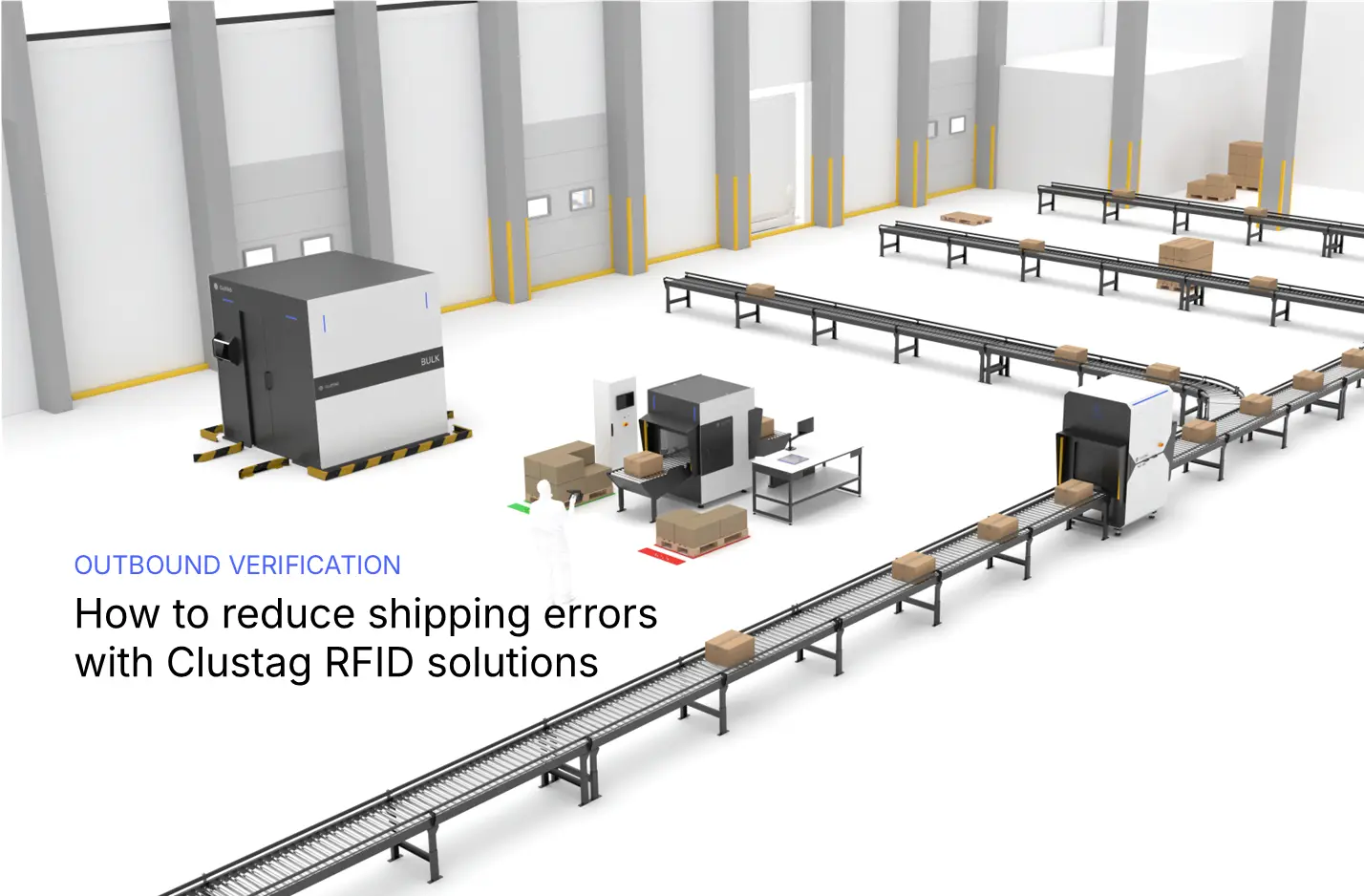
    Clustag delivers an advanced RFID ecosystem designed for automated outbound verification, integrating seamlessly with ERP/WMS systems and supporting both manual and automated workflows.

    Core Features of RFID outbound verification

    • Item‑Level Accuracy: Reads thousands of RFID tags in seconds, ensuring 100% verification before sealing
    • RFID‑Shield Technology: Prevents cross‑reading between pallets and boxes
    • Real‑Time Alerts: Immediate notifications for discrepancies between shipment and order data
    • Scalable Integration: Works with conveyor systems, AGVs, and manual packing stations

    Our flagship device, the Clustag MOT S20 Station, guarantees item‑level accuracy at speed. For high‑volume environments, Bulk Stations and Audit Plus Stations provide flexible options for outbound workflows.

    “Our MOT Station proves that precision matters. When the gates close, the system reads only what’s inside, without any stray readings, without errors. That’s how we guarantee item‑level accuracy with our RFID-Shield technology”, Manolo Reguart

    The solution: KPIs That Prove Outbound Verification Delivers Results

    Clustag solutions align with GS1 EPC standards and meet retail mandates, reducing the risk of non‑compliance and penalties. This ensures shipment conformity and builds trust with strategic retail partners.

    Implementing RFID solutions for outbound verification delivers measurable benefits:

    • >99.8% Accuracy in shipment validation
    • Zero chargebacks related to outbound errors
    • Reduced labor costs through automation
    • Enhanced retailer confidence, strengthening long-term partnerships

    For wholesale operations with Nordstrom, Macy’s, Walmart, and similar retailers, Clustag ensures:

    • Chargeback prevention by guaranteeing shipment conformity
    • Operational efficiency during peak seasons (e.g., Black Friday, holiday sales)
    • Global scalability, supporting omnichannel strategies across multiple regions

    Experience RFID verification live at the Clustag Experience Center

    Outbound verification isn’t optional, it’s a strategic necessity. By adopting Clustag RFID solutions, brands protect margins, maintain compliance, and build stronger relationships with wholesale partners.

    Ready to see it in action? Visit the Clustag Experience Center and discover how we manage outbound verification with real‑time RFID systems.

  • How to reduce shipping errors with Clustag RFID solutions

    How to reduce shipping errors with Clustag RFID solutions

    In logistical and industrial environments, even a minor discrepance can trigger a chain of inefficiencies: delayed shipping, reprocessing costs and loss of client confidence. At Clustag, we know that accuracy and visibility form the foundation of operational excellence. Our RFID solutions help companies reduce shipping errors and optimize outbound verification in real time, ensuring a complete traceability without slowing operations

    By integrating smart audit processes and guided workflows, organization not only reduce shipping errors, but also strengthen their quality control systems, boost profitability and enhance their sustainability performance. This approach transforms the way teams manage outbound verification and quality assurance.

    Why shipping errors happen and how address them

    Order preparation and shipping errors create one of the main challenges in complex logistics. Multiples sources often generate discrepancies including human herrors in picking and packing or system mistmatches between digital records and the physical reality of pallets and boxes.

    Common causes include:

    These issues create bottlenecks, that slow operations and affect customer satisfaction, leading to returns or complaints. Companies need reliable process to detect and correct errors before orders leave the warehouse.

    Clustag’s consultive approach

    At Clustag, we take a consultative and personalized approach that goes beyond implementing technology. Each detected discrepancy goes directly to a specific verification area, where operators validate the content manually or semi-automatically. This method ensures that staff corrects mistakes immediately, without disrupting operational flow.

    Our experience in sectors such as retail, pharma, grocery allows us to adapt reconciliation processes for each type of operation, ensuring that each shipment meets required standards without compromising speed or efficiency.

    How content reconciliation works

    Content reconciliation enables companies to compare the actual content of each unit with expected data, guarantying total accuracy and complete traceability. Before reviewing individual units, operators conduct a pre-check of documentation and labeling to identify possible discrepances. This initial step ensures that operators work over with reliable information, avoiding additional mistakes and unnecessaries delays.

    Step-by-step process

    1. Order reception: This system identifies units that need review, highlighting those with higher risk based on history or order complexity.
    2.  Data comparison: Operators use stations such as: AUDIT, AUDIT PLUS o MASSIVE PLUS to compare actual RFID data with expected information. This check can be manual or semi-automated, adapting to operation and shipment volume.
    3. Errors detection: If s discrepancy is found, the system flags the unit and guides to the operator step by step for correction.
    4. Immediate correction: Depending on complexity, mistakes are resolved manually or semi-automatically. Every action is registered to guarantee traceability and quality control.
    5. Tracking and traceability: Zentup Workflow, logs all data, providing full visibility and real-time tracking, for internal and external audits.

    This flow guarantee that no unit with errors leaves the warehouse, maintaining strict control without affecting operational speed, or staff efficiency.

    Operational benefits of Clustag solutions

    Implementing Content reconciliation brings direct and measurable advantages for logistic operations:

    These benefits enable companies to reduce shipping errors, increase supply chain resilience and improve operations predictability, which is critical in high-volume and complex environments.

    Best practices to reduce shipping errors

    Before implementing a technology, it is essential to stablish solid and consistent processes that guide the operations reliably.

    Standardized procedures

    Clear audit and verification steps ensure consistency in every outbound operation. This includes checklists, document review and physical content checks, and validation of information through RFID.

    Staff training

    Well-trained operators can identify common picking and packing errors, act quickly, and prevent discrepancies from escalating. Continuous training tis key to maintaining high standards of accuracy and speed in operations.

    Continuous monitoring and improvement

    Data analysis through our middleware Zentup enables companies to identify recurring error pattern, assess processes effectiveness, and adjust operations to minimize future mistakes. This creates a cycle of continuous improvement that enhances efficiency and reduce risk.

    Automation with human oversight

    Combining RFID technology with human oversight provides flexibility, adaptability and accuracy. Staff can be focus on complex cases, while technology manages routine verifications, guarantying agile and reliable operations.

    Results and KPIs Clustag helps improve

    Adopting Content reconciliation directly impacts key operational indicators:

    Our experts provide consultative guidance, process refinement and deliver strategic recommendations with each implementation.

    Strategic and consultive benefits per sector

    Different sectors have unique logistics and operational requirements, so the benefits of content reconciliation, vary according to process complexity and product criticality. At Clustag, our consultative approach allows us to tailor solutions for every industry, guaranteeing each operation achieves the highest standards of accuracy, traceability and efficiency. Strategic implementation not only reduces shipping errors but also optimize productivity and strengthen supply chain confidence.

    Retail and fashion

    Ensures accuracy in orders, colors, sizes and SKUs, avoiding costly returns and increasing client loyalty. Content reconciliation allows keeps inventory synchronized and minimize errors in high-volume operations. Moreover, by combining human oversight with RFID technology, errors are detected and corrected immediately, protecting customer experience and brand reputation.

    Pharma and healthcare

    Ensures serialized products and critical supplies comply with regulations and reach their destination accurately. Reduces risks of errors that could impact patient safety and regulatory compliance.

    Grocery

    Confirms shipment integrity and control products expiration date and regulatory compliance Allow more efficient planning of deliveries, reducing waste and losses.

    Nordic retailer optimizes shipping accuracy

    A recent project with a leading Nordic retailer ilustrates this impact of Clustag. During the last quarter, their MOT system processed 17.281 boxes, of which 1.824 were identified as KO boxes. Thanks to the integration with Clustag’s Zentup Workflow interface, it could audit each box in real time and identify the origin of the discrepancies:

    Once the boxes were audited, they were updated, so they could be shipped correctly. This process not only reduced high reworks costs, but also strengthened brand reputation and customer trust, showing how accuracy and visibility create measurable business value

    Excellence in every shipment

    With Clustag, each shipment is become an opportunity to demonstrate, reliability, accuracy and commitment with the client. Our solution ensures that shipping issues go unperceived, protecting operational efficiency and customer confidence.

    For more information, contact our experts to design the most efficient and tailored solution for your warehouse operations.

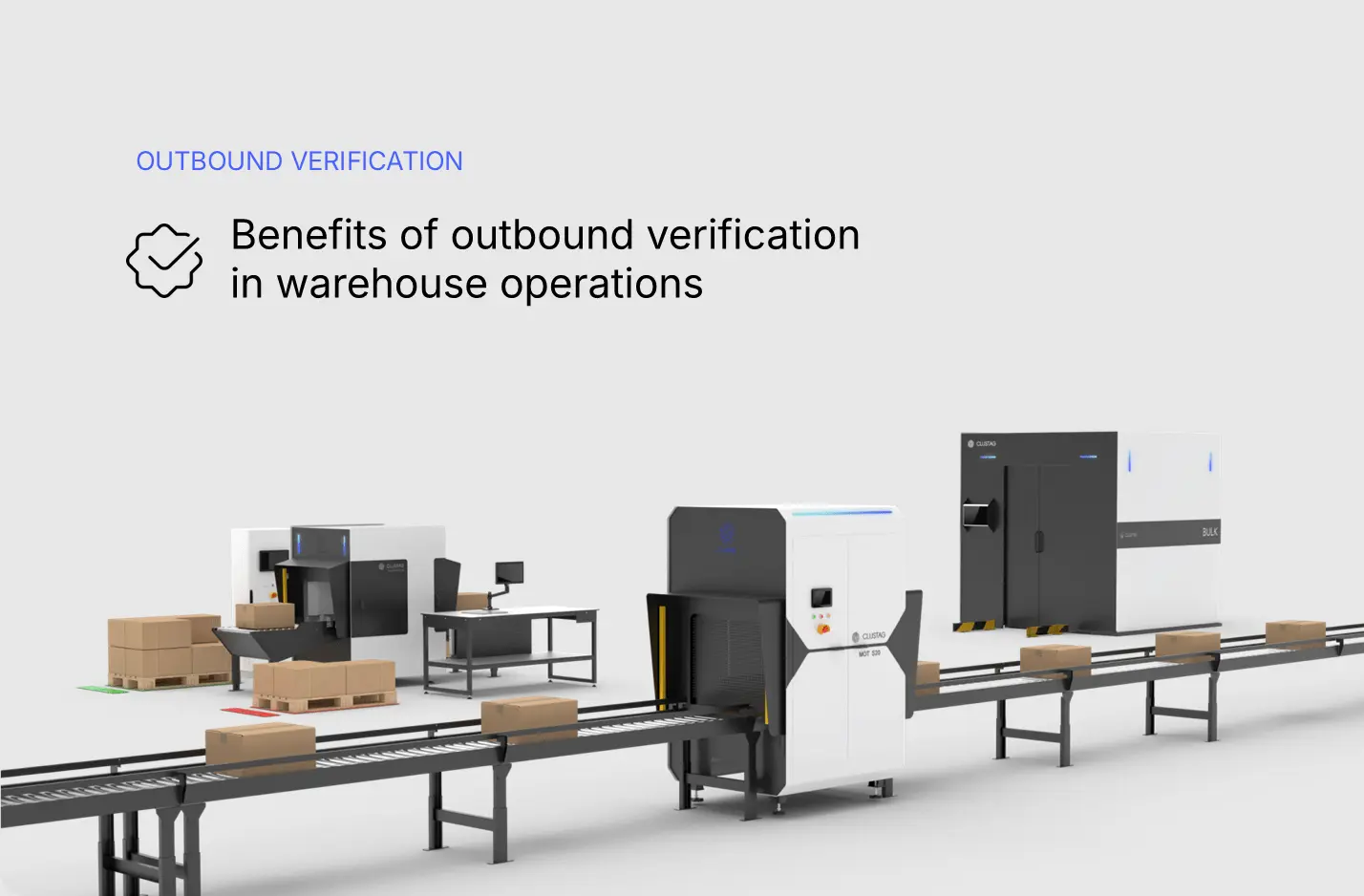
  • Benefits of outbound verification in warehouse operations

    Benefits of outbound verification in warehouse operations

    At Clustag, we work to ensure that every warehouse outbound operation is accurate, efficient and fully traceable. Implementing outbound verification in shipping processes guarantee that each order leaves the warehouse correctly and is recorded with complete real time visibility. The benefits of outbound verification not only improve shipment accuracy but also optimize inventory management and reduce errors that can affect supply chain.

    With our RFID solutions and seamless integration with ERP and WMS systems, our Clustag’s team of experts provides full control over the outbound flow, from picking to final delivery, enhancing operational efficiency while minimizing costs associated with errors and returns.

    Improved shipment accuracy

    Ensuring every order is dispatched accurately is critical to maintaining customer satisfaction and operational efficiency. Outbound verification plays a vital role in minimizing errors before items leave the warehouse

    Enhace shipment accuracy

    At Clustag, we work to make outbound verification a reliable and automate process. Each pallet, box or item is validated through RFID before leaving the warehouse, ensuring that the shipment exactly matches the customer order

    Reducing errors with RFID

    Our RFID solutions automatically identify and cross-check each unit against ERP/WMS records, eliminating manual checks and significantly reducing human error.

    In a retail logistical center, our team implemented RFID technology to verify thousands of daily shipments. Shipment accuracy increased to 99,8%, while inventory control was updated in real time without disruption operations.

    Enhanced visibility and traceability

    Real-time visibility of every in the outbound process is essential for effective warehouse management. Complete traceability enables, logistic teams to monitor operations and respond to issues immediately.

    Real time tracking

    At Clustag, we work to offer complete visibility over the outbound process. By automatically reading RFID tags at strategic points, logistics managers can track pallets, cartons and individual items in real time through the ERP o WMS.

    Item-level records

    Our RFID middleware generates detailed item-level records, offering complete traceability throughout the outbound process. This facilitates audits, achievement analysis and immediate identification of operational issues.

    Our team supported an international logistics operator in monitoring of 100.000 daily items, achieving complete item-level traceability and reducing inventory discrepancies by 95%

    Time and efficiency optimization

    Optimizing outbound operations saves time, reduces bottlenecks and allows warehouse staff to focus on higher-value tasks. Implementing technology-based verification is key to speeding up processes.

    Speeding up the outbound process

    With our solutions, Clustag works to speed up the outbound process through mass RFID readings, eliminating manual steps and enabling operators to handle larger order volumes in less time.

    Reducing downtime and bottlenecks

    Automating outbound verification with RFID prevents interruptions caused by human errors, reducing bottleneck in critical areas such as consolidation a shipping.

    Integration with ERP and WMS systems

    Seamless integration between outbound verification and ERP/WMS platforms ensures that data flows with not interruptions, improving inventory accuracy and operational decision-making.

    Verification automation and inventory update

    At Clustag, we work to integrate outbound verification with existing ERP/WMS systems, so that each RFID read automatically updates inventory and confirms dispatched orders.

    Real time data synchronization

    This ensures a single, accurate view of stock, facilitates planning of routes, replenishments and deliveries. Reduce discrepances between systems, optimizing the entire supply chain.

    Our experts team ensures seamless and scalable integration, maintaining operational efficiency without interrupting daily warehouse activities.

    Scalability and adaptability

    Warehouse operations must adapt to growing volumes and changing business requirements. RFID solutions provide the flexibility to scale efficiently while maintaining control.

    Adapting to growing volumes

    At Clustag, we work to make our RFID solutions scalable, capable of handling hundreds to thousands of units per minute, adapting to increasing demand or network expansion.

    Suitable for manual and automated environments

    Our solutions are flexible: they can be deployed in manual processes with RFID portals or handheld readers, as well as in fully automate systems with conveyors and fixed readers. This enables warehouses to gradually increase automation while always maintaining traceability and control.

    RFID specific benefits

    Leveraging RFID technology in outbound logistics provides measurable advantages in accuracy, efficiency and traceability:

    These improvements help maintain high OTIF compliance rates and optimize overall warehouse efficiency.

    The Benefits of outbound verification are clear: higher accuracy, complete traceability, and optimized time in outbound operations. At Clustag, we work to ensure every outbound process is managed efficiently, reducing errors and enhancing visibility throughout the supply chain.

    Would you like to explore how to enhace outbound verification and traceability in your warehouse?

    Contact our team of experts and discover how Clustag can help you optimize your operations with a fully customized approach to your processes.

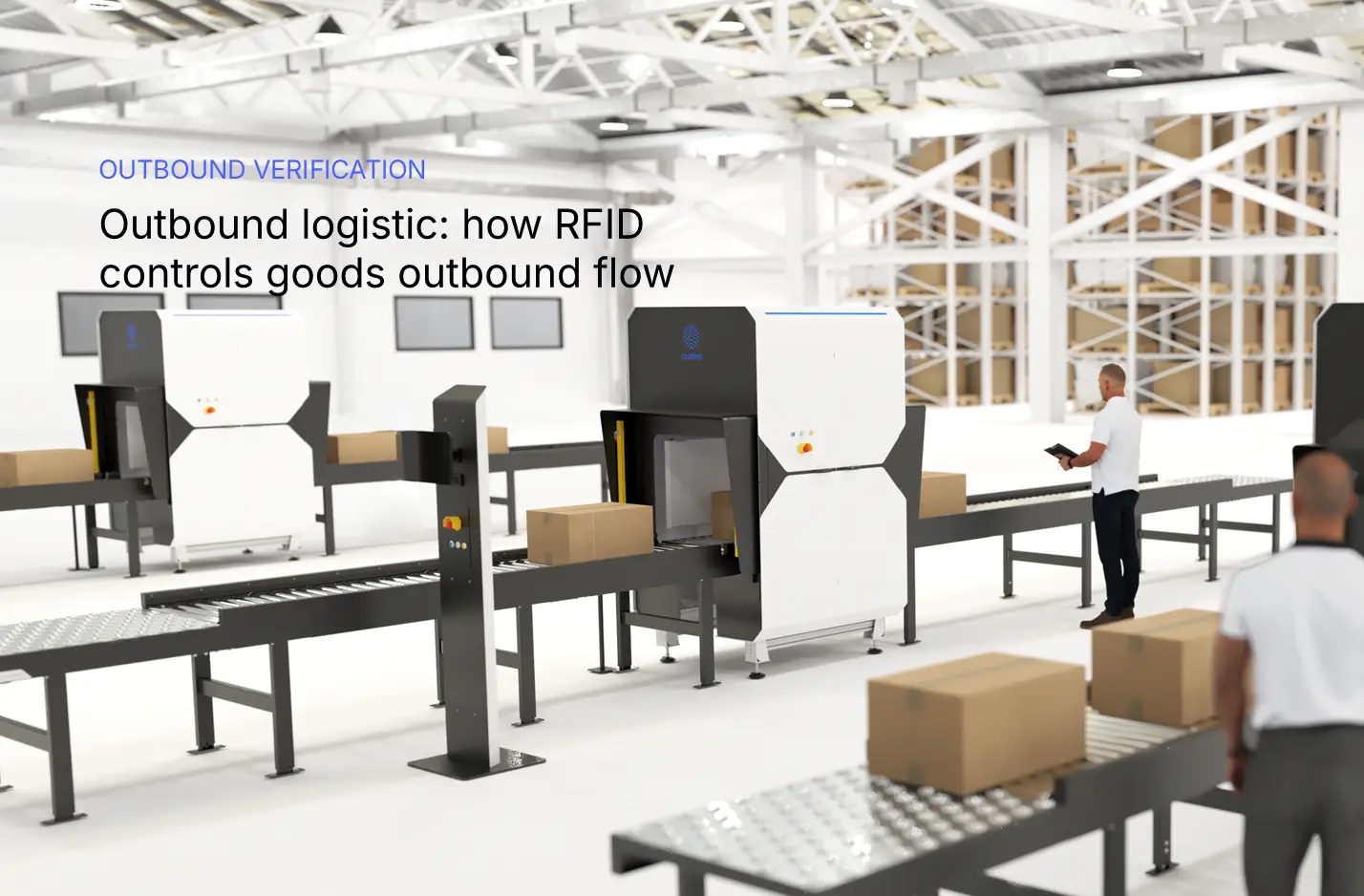
  • Outbound logistic: how RFID controls goods outbound flow

    Outbound logistic: how RFID controls goods outbound flow

    In outbound logistic, accuracy is non-negotiable. As the final stage before goods leave the warehouse, outbound verification guarantees that the right items reach the right customer, on time. RFID technology, integrated with middleware like Zentup, performs a key role in automating and securing this process, especially in high-volume, multi-SKU environments.

    What is outbound verification?

    Outbound verification is the process of confirming that the items prepared for shipment match the customer’s order before dispatch. It serves as a key control point within the outbound logistics process, ensuring accuracy, contractual compliance, and traceability.

    Although, it forms part of the outbound logistic value chain, it stands out for its specific focus on validating the products leaving the warehouse. It is especially relevant in sectors where shipping accuracy is non-negotiable, such as retail, 3PL, pharmaceutical and groceries.

    Operational flow of outbound logistic with RFID

    RFID technology enables fast and automated outbound logistic by capturing item-level data in real time. Here is how it works:

    Item-level RFID scanning

    Order validation via Zentup middleware

    Discrepancy detection and immediate correction

    Final validation and complete traceability

    Operational benefits of RFID-based outbound logistic

    Implementing RFID for outbound logistic provides measurable benefits in logistics KPIs:

    Integration with ERP and WMS: architecture and automation

    RFID Outbound logistic does not work in insolation. Its real value multiplies when integrated with management system such as:

    Zentup acts like middleware between RFID devices and these systems, managing events, validating rules and data flows. This architecture enables automate of tasks such as:

    Manual vs RFID-based verification

    AspectManual Verification    Verification RFID
    Time for shipmentHighVery low
    AccuracyVariableHigh (99,9% or more)
    TraceabilityLimitedComplete, item-level
    Operating costHigh (labor-intensive)Optimized (automation)
    ScalabilityLimitedHigh
    Human error riskHighMinimal

    Real-world stages of RFID error prevention

    Impact on customer experience and after-sale

    Outbound verification not only improves internal operations, but also has a direct impact on customer experience:

    It also enables value-added services such as:

    Applications in outbound shipments

    RFID outbound logistic adapts to different shipment types and industries.

    Whether verifying outbound activities in warehouse or ensuring outbound compliance in omnichannel retail, RFID guarantees speed and accuracy.

    Implementation examples

    These verification workflows are used in both automated and manual operations:

    These examples demonstrate how RFID enhances outbound verification, reducing errors and increasing operational performance.

    Outbound verification is the final quality checkpoint before items leave the warehouse. It guarantees that every shipped item is correct, traceable and ready for delivery. By integrating RFID with Zentup middleware, companies gain real time visibility, operational accuracy and complete traceability.

    In a supply chain where accuracy and speed are essential, RFID technology transforms outbound logistic into an agile, automated, and data-driven process that protects both the business and the customer.