For manufacturers and 3PLs, shipping errors are more than just a logistical headache, they are a financial drain. Retailer penalties and dispute costs can quickly erode margins. Achieving significant chargeback reduction requires moving beyond manual checks toward a system of automated, indisputable verification.
A chargeback is often the price of a lack of evidence. Clustag RFID Solutions provides the digital proof needed to validate every shipment before it leaves the dock.
By implementing automated outbound verification, organizations can eliminate the root causes of shipping disputes and secure their relationships with major retailers.
Understanding Chargeback Challenges in Retail Fulfillment
Managing accuracy across warehouse operations becomes more complex as retail organizations handle diverse product categories and seasonal peaks. Before leveraging digital tools, it is vital to understand the operational risks.
Common Sources of Discrepancies
Manual Picking Routines: Variability in SKUs often leads to picking errors.
Labeling Inconsistencies: Incorrect or missing labels trigger retailer penalties.
Repetitive Barcode Scanning: A bottleneck that increases the margin for human error.
The Financial Impact on Retail Margins
When errors reach their destination, retailers face deductions tied to inaccurate shipments or failed compliance. Each deduction reduces margins and adds an administrative workload for operations, finance, and customer service teams.
How RFID Supports Chargeback Reduction
RFID technology has become a key enabler for retail operations seeking higher accuracy and measurable chargeback reduction. With Smart RFID Solutions from Clustag, we transform warehousing into an automated, verified environment.
Efficiency Comparison: Manual vs. RFID Control
Process
Traditional Manual Risk
Clustag RFID Solutions
Inbound Validation
Paper-based / Slow
Instant PO matching
Packing Accuracy
Manual SKU verification
Automated assortment check
Outbound Control
Sampling / Visual checks
100% Automated validation
Data Integrity
Prone to deviations
Real-time digital traceability
Protecting the Lifecycle of the Retail Shipment
To achieve sustainable chargeback reduction, precision must be embedded into every touchpoint of the logistics chain:
Automated Inbound Validation: Confirm that what arrives matches purchase order expectations before discrepancies flow downstream.
Real-time Packing Accuracy: Stations equipped with RFID automatically confirm each carton. Operators receive immediate notifications if an incorrect SKU is detected.
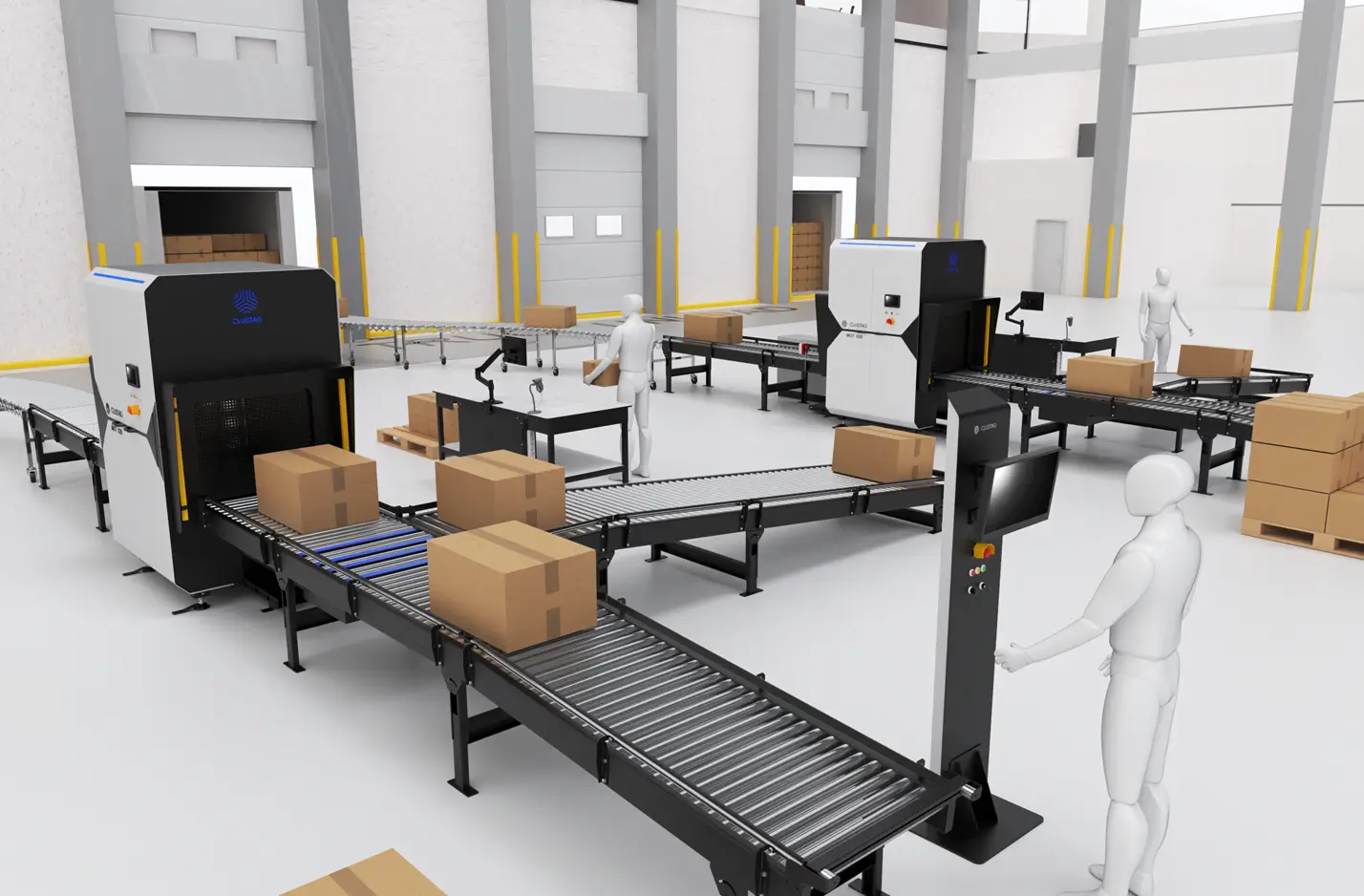
Outbound Control:RFID portals positioned at outbound areas validate each carton before it leaves, ensuring orders are complete and correctly routed.
Precision supports growth. By validating every item and confirming every assortment, we reduce the likelihood of disputes and strengthen reliability across store networks.
Enhancing Operations Through Analytics
Technology is most effective when paired with strong routines. By combining structured processes with real‑time data, retail organizations can boost execution quality and minimize operational variability.
Standardized Workflows: Embed accuracy into daily routines, even during high‑volume seasonal peaks.
RFID-powered Analytics:Zentup generates real-time dashboards that highlight patterns in stock deviations or pick errors.
Store Alignment: When stores receive error-free deliveries, teams focus on merchandising and customer service rather than resolving discrepancies.
Building Long-term Financial Resilience with Clustag RFID Solutions
RFID delivers value far beyond real‑time visibility. It provides the data needed to avoid operational deviations that lead to deductions and financial loss.
Operational Integrity: A roadmap for consistent performance and effective chargeback reduction.
Enhanced Visibility: Real-time tracking from inbound reception to outbound dispatch.
Scalable Work Cycles: Handle higher volumes without compromising quality during product launches or promotions.
Take Control of Your Retail Efficiency
We would be glad to help you explore how digital automation enhances operational integrity and reduces financial losses. You can reach us through the contact form and you are also welcome to visit our Customer Experience Center, where we demonstrate our RAIN RFID Solutions in action and discuss how they can support your operational goals.
In the current retail environment, operational pressure continues to rise as brands face increasing inventory complexity, omnichannel demand, and rapid product rotation. To stay competitive, retailers are increasingly turning to RFID Store Transfer Solution that strengthen accuracy, accelerate workflows, and deliver real-time visibility without adding complexity.
Our approach focuses on building adaptable, data-driven configurations that simplify store execution and enhance decision-making. By analyzing how each operation truly works, we help teams remove friction, strengthen control, and elevate performance across every store.
Building Adaptable Systems for Store Performance
Every store has unique dynamics, layout restrictions, and operational priorities. Rather than applying generic templates, we build flexible configurations that respond to how each store actually functions.
Understanding Store Dynamics
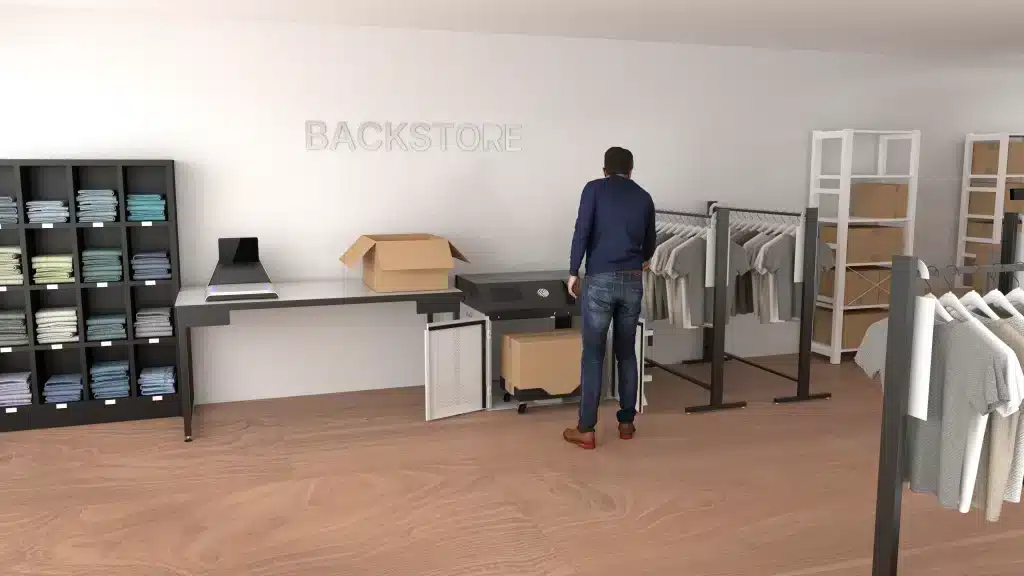
Backrooms face constant pressures such as:
Variable shipment sizes.
Seasonal return peaks.
High SKU density.
Unpredictable customer demand.
By observing these patterns, we codesign reading points and validation flows that stay consistent even under fluctuating volumes. Our goal is to ensure every store captures reliable item-level data without interruptions.
Aligning with Strategic Retail Goals
Retailers operate with different priorities: sustainability, reduced shrinkage, improved omnichannel accuracy, or faster replenishment. We map our configurations to these priorities, ensuring data consistency from inbound to sales floor and supporting stronger fulfillment and inventory integrity through specialized RFID Store Solutions.
Designing Solutions That Scale With Your Operations
A future‑ready store system must evolve over time. For this reason, we create modular RFID configurations powered by a Smart RFID ecosystem that ensures software, devices, and data flows remain synchronized as the business grows.
Combining Automation with Human Efficiency: Store teams gain agility when repetitive tasks are removed. Automated read points and verification steps streamline counts and allow staff to focus on customer experience.
Superior Accuracy through Item‑Level Insight: RAIN RFID technology elevates store visibility by transforming every product movement into actionable information. With high‑performance reading and real‑time synchronization, retailers reduce errors and reinforce inventory integrity.
Practical Applications to Strengthen Store Execution
The true impact comes from selecting configurations that respond to specific operational pain points. Our approach focuses on building RFID Store Solutions that solve real problems rather than applying universal models.
1. Enhancing Inbound Visibility
For environments affected by slow manual validation or recurring discrepancies, we deploy streamlined inbound verification setups that confirm item accuracy immediately upon arrival. These configurations:
Reduce check‑in times.
Prevent errors caused by mislabeled units.
Accelerate product availability on the sales floor.
2. Processing Returns with Speed and Precision
High return volumes can overwhelm backrooms. We design rapid return‑processing workflows equipped with dependable item‑level checks. This prevents missed sales opportunities, especially for brands managing highly seasonal assortments.
3. Maintaining Real‑Time Stock Awareness
For locations with large assortments or frequent movement, we implement item‑location scanning routines that help teams detect missing units early. These routines are tailored to each store’s layout, supporting better omnichannel execution.
Creating Value Through the Smart RFID Ecosystem
Our holistic approach ensures every device, software module, and reading point reinforces the others through a unified architecture.
Seamless Enterprise Integration: We ensure every read point aligns with the retailer’s ERP, POS, and e-commerce systems.
Operational Evolution: Modular configurations enable retailers to expand functionality or add new read points as campaign cycles and product assortments shift.
Drive Measurable Impact with Personalized Innovation
Improving store workflows requires more than deploying technology. It demands a careful study of product behavior, customer journeys, and process rhythms.
If you are ready to enhance accuracy, visibility, and operational flow across your stores, we invite you to contact our team and explore how a personalized RFID strategy can empower your retail operations.
Why outbound verification matters for retail compliance
Wholesale operations with major retailers likeNordstrom, Macy’s, and Walmartdemand strict compliance with shipping standards. Any non-conformity,such as incorrect quantities, missing RFID tags, or misaligned labeling , can trigger chargebacks, costly returns, and strained relationships. In a margin‑sensitive market, avoiding these penalties is critical.
Retailers have issued RFID mandates to suppliers, requiring item-level tagging and GS1/EPC compliance to ensure visibility and accuracy across the supply chain. Failure to comply can lead to financial penalties and even loss of vendor status
“Outbound verification is not just a technical step, it’s the last safeguard before goods leave the warehouse. Automating this process with RFID ensures compliance and protects margins.” Manolo Reguart
The Challenge: The risks of skipping outbound verification in wholesale operations
Outbound verification is the final checkpoint before goods leave the distribution center. Manual checks are slow, error‑prone, and incompatible with high‑volume environments.
Operational inefficiencies due to rework and returns
Loss of trust with strategic retail partners
According to GS1 standards, EPC/RFID compliance is essential for traceability and retail mandates.
Meeting retail mandates and GS1 Standards
Clustag delivers an advanced RFID ecosystem designed for automated outbound verification, integrating seamlessly with ERP/WMS systems and supporting both manual and automated workflows.
Item‑Level Accuracy: Reads thousands of RFID tags in seconds, ensuring 100% verification before sealing
RFID‑Shield Technology: Prevents cross‑reading between pallets and boxes
Real‑Time Alerts: Immediate notifications for discrepancies between shipment and order data
Scalable Integration: Works with conveyor systems, AGVs, and manual packing stations
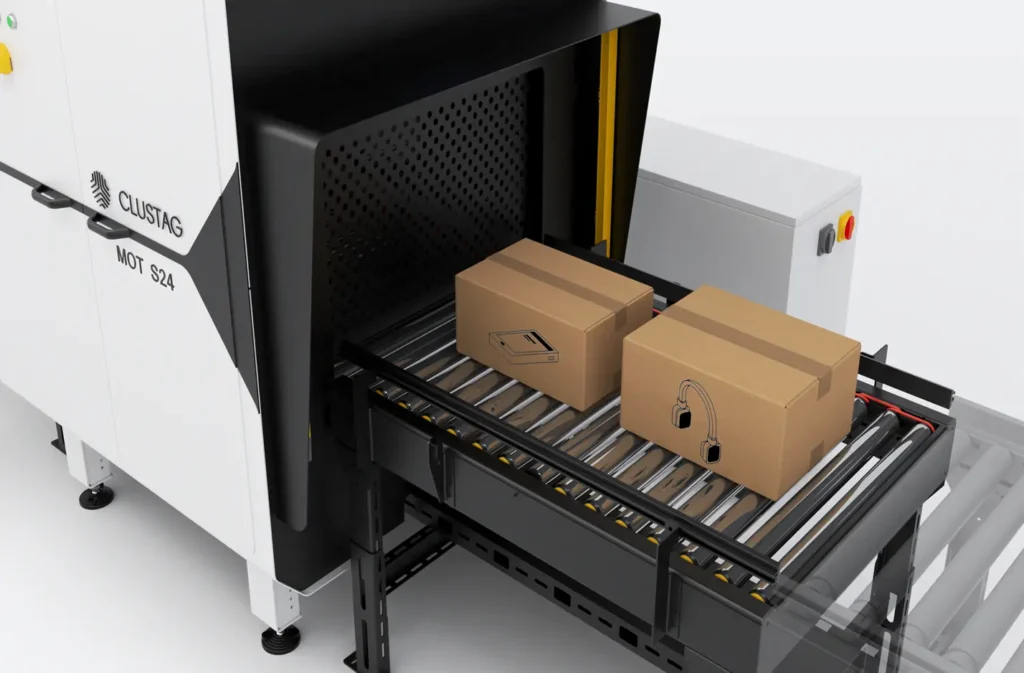
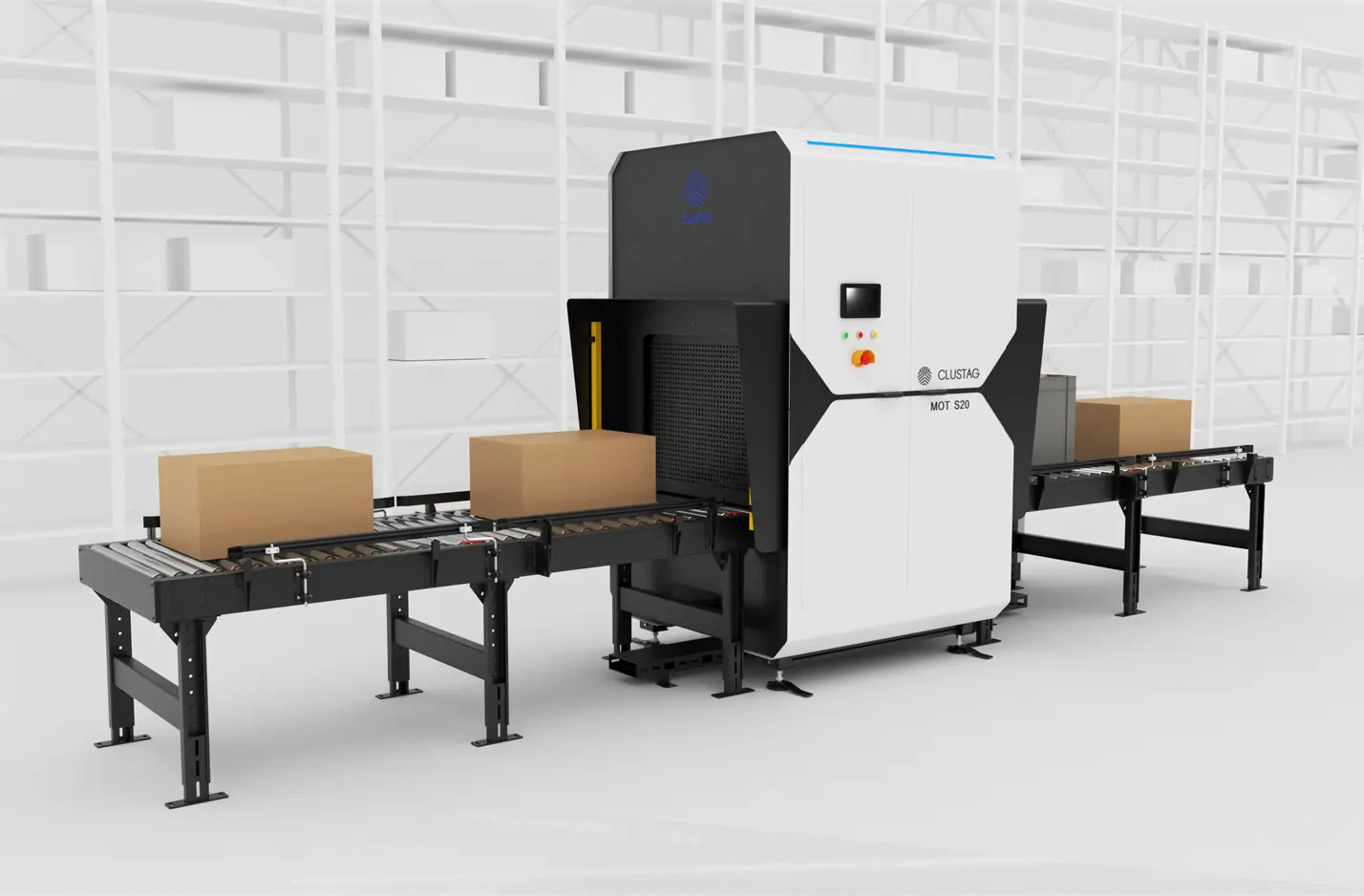
Our flagship device, the Clustag MOT S20 Station, guarantees item‑level accuracy at speed. For high‑volume environments, Bulk Stationsand Audit Plus Stationsprovide flexible options for outbound workflows.
“Our MOT Station proves that precision matters. When the gates close, the system reads only what’s inside, without any stray readings, without errors. That’s how we guarantee item‑level accuracy with our RFID-Shield technology”, Manolo Reguart
The solution: KPIs That Prove Outbound Verification Delivers Results
Clustag solutions align with GS1 EPC standards and meet retail mandates, reducing the risk of non‑compliance and penalties. This ensures shipment conformity and builds trust with strategic retail partners.
Implementing RFID solutions for outbound verification delivers measurable benefits:
For wholesale operations with Nordstrom, Macy’s, Walmart, and similar retailers, Clustag ensures:
Chargeback prevention by guaranteeing shipment conformity
Operational efficiency during peak seasons (e.g., Black Friday, holiday sales)
Global scalability, supporting omnichannel strategies across multiple regions
Experience RFID verification live at the Clustag Experience Center
Outbound verification isn’t optional, it’s a strategic necessity. By adopting Clustag RFID solutions, brands protect margins, maintain compliance, and build stronger relationships with wholesale partners.
Ready to see it in action? Visit the Clustag Experience Centerand discover how we manage outbound verification with real‑time RFID systems.
Black Friday is no longer just a date on the calendar. It has become the biggest logistics challenge of the year for the apparel and fashion sector. In this context, RFID in fashion during Black Friday helps brands manage inventory more efficiently, optimize Black Friday returns, and recover sales that would otherwise be lost. Every minute counts. Any item missing from stock means a lost sales, and in a competitive market, delays push customers toward competitors.
Retailers face a dual challenge. They must manage high sales volumes while also processing a large number of returns without affecting stock availability. As the holiday season approaches, pressure increase. This makes fashion inventory management with RFID essential for operational success.
The challenge of returns in fashion during Black Friday
Returns are a growing reality in e-commerce, and the fashion industry is particularly affected. According to the 2025 Annual Returns Benchmark Report for Spain, prepared by ZigZag in collaboration with Retail Economics, the value of online returns in Spain is expected to reach €13.3 billion by 2025. During campaigns like Black Friday, consumers may return up to 35% of their purchases, creating a logistical bottleneck for retailers.
A common practice known as bracketing, buying multiple sizes or colors only one, make the situation even more challenging. Over 60% of online fashion shoppers admit to doing this, multiplying the volume of returns and putting pressure on order preparation processes and retail reverse logistics.
The economic impact is significant: in Europe, operational costs associated with returns can reach up to 66% of the product’s value. Any delay in reintegrating a returned item into inventory translates into lost sales that end up in competitor’s hands. In addition, delayed returns can lead to inaccurate stock data, causing issues with online availability and in-store replenishment, ultimately affecting customer satisfaction and brand reputation.
From 72 to 8 hours: the speed of fashion inventory management with RFID
Historically, a returned item could take up to 72 hours to be reintegrated into stock. Thanks to RFID in fashion during Black Friday, brands can reduce this time to less than 8 hours. This technology, based on smart tags that can be read remotely, allows every item to be tracked in real time, even during the return process.
Complete inventory visibility transforms retail reverse logistics: it creases to be an unavoidable cost and becomes an additional sales opportunity. Each item quickly returned to the store or online inventory means satisfied customers and recovered sales. Moreover, RFID helps retailers avoid stock discrepancies, allowing them to plan better promotions, restock efficiently, and make data-driven decisions during peak sales, periods.
By reducing reintegration times, brands can also manage high-demand products more effectively. For example. If a popular jacket is returned in the morning, it can be back online or ins-tore by the afternoon, ready for another customer who might have otherwise missed the opportunity to purchase it.
Clustag recovers sales in record time
The Spanish tech company Clustag has demonstrated how RFID in fashion during Black Friday can make a measurable difference. During the latest European campaign, their solutions allowed the reintegration of 20 million returned items in record time.
The economic outcome was clear: their clients recovered more than €600 million in sales that would have otherwise been lost to competitors.
Luis Rius, CEO of Clustag explains: “During campaigns like Black Friday or Christmas, every minute counts. Our technology allows returns to be processed and available for sale almost immediately, preventing customers from turning to competitors. It’s not just about optimization. It’s about ensuring an impeccable customer experience.”
By combining speed with accuracy, Clustag ensures that retailers can handle even the most complex holiday peaks without compromising service quality or losing revenue.
Optimizing Black Friday returns to improve customer experience
The benefits of RFID go beyond speed. In an omnichannel environment, where consumers expect to buy online and return or pick up products in-store seamlessly, fashion inventory management with RFID becomes a strategic asset. Its advantages include:
Intelligent stock redistribution between physical stores and online channels. Retailers can decide in real time whether returned items should go back to the closest store or to the central warehouse.
Improved product availability, with returns reintegrated almost immediately, ensuring customers find what they want without frustration.
Reduced losses from delayed returns reintegrated almost immediately, ensuring customers find what they want without frustration.
Reduced losses from delayed returns, preventing customers from shopping elsewhere.
Optimized customer experience, increasing loyalty. Consumers are more likely to shop with brands that provide fast, reliable, and transparent return processes.
Thanks to this, optimizing Black Friday returns cases to be a challenge and becomes a competitive advantage for fashion brands. Retailers can even promote their fast return capabilities as part of their marketing campaigns, turning what was traditionally a pain into a selling point.
Why RFID in fashion during Black Friday is key for the future
The fashion market is constantly evolving, and logistics has become a strategic factor. The ability to process returns quickly and keep inventory updated in real time determines the difference between a successful campaign and lost opportunities.
RFID in fashion during Black Friday offers a triple benefit:
Operational efficiency: less time lost on returns, freeing staff to focus on other critical tasks.
Sales recovery: each item reintegrated quickly means recovered revenue and minimized lost opportunities.
Enhances customer experience: fast returns and guaranteed availability increase loyalty and build long-term brand trust.
In a market where consumers are increasingly demanding, RFID becomes an essential tool to maintain relevance and competitiveness. It also supports data-driven decision-making, allowing retailers to anticipate demand trends, prevent stockouts, and optimize inventory across multiple channels.
Make the most of Black Friday with Clustag
Don’t let returns slow down your sales this Black Friday. With RFID in fashion during Black Friday, Clustag helps you optimize Black Friday returns, recover stock, and ensure every item is available to your customers in record time.
Discover how our solutions can transform your retail reverse logistics, improve fashion inventory management with RFID, and turn returns into sales opportunities. This Black Friday, sell more, sell faster, and keep your customers satisfied with Clustag.
Visit Clustag’s customer experience centre
Visit our Customer Experience Centre to see our solutions in action and experience the speed, accuracy, and traceability that Clustag can bring to your warehouse. To explore how our RFID solutions can be tailored to your specific needs, fill out our contact form and one of our experts will guide you through a personalized demonstration. Don’t miss the opportunity to optimize your warehouse processes and take your order preparation to the next level.
Reverse logistics has become one of the biggest black holes in modern ecommerce. While commercial teams push massive campaigns and promotions the reality in the warehouse moves at a different pace: thousands of products are returned every day, and most take too long to be restocked and made available online. Implementing RFID returns processing with Inbound Verification and RFID for returns can help close this gap, ensuring returned items are quicky visible online and reducing lost sales.
This gap is especially critical in premium fashion, where top-selling items have very short sales cycles. Clara’s story illustrates how slow returns processing can turn a physical available product into a lost online sale.
Slow returns processing and delayed restocking
Madrid, December 12th.
Clara knew exactly what to give for Christmas: a limited-edition camel jacket she had seen weeks earlier on her favourite brand’s website. After Black Friday, it appeared as “sold out”. But she trusted that typical December returns would make it available again.
What Clara didn’t know was that the jacket she wanted had already been returned to the warehouse on December 9th. However, it hadn’t been processed yet. The warehouse used a manual returns processing workflow: opening the package, validating the label, checking condition, re-tagging, updating systems. During the post-Black Friday surge, this process took 72 hours.
On December 11th, Clara checked the website again. It was still sold out. With Christmas approaching, she bought an alternative from another brand.
For her, it was just a practical decision. The company, however, lost a sale. Meanwhile, the competition gained a customer.
The impact of stockouts during peak season
These situations are not exceptions; they are constant during peak periods. For a premium fashion brand with a strong online channel, the impact is huge:
Approx. 10.000 returns between Black Friday and Christmas
40% are high-rotation items
Average price €90
Sales that never happen, because the item is in the warehouse but not online, represent €540.000-€720.000 in lost revenue over three weeks.
This is not a commercial failure or poor planning: it is an operational problem. And this is where RFID returns processing and RFID reverse logistics make a difference.
How returns processing affects online stock availability
Before diving into solutions, it is important to understand how the returns process itself affects online stock availability. Most traditional systems create a time gap between what exists physically and what is shown digitally. This gap is the root of “phantom sales” that never happen.
Out of stock due to returns
When a return takes days to be restocked, the e-commerce marks the item as sold out. This hides hundreds of items from customers that are physically in the warehouse. A delay of 48 and 96 hours can make the difference between selling a product or losing it forever to the competition.
Customer frustration is evident, but the economic impact is even greater: an invisible product is an unsellable product.
Inventory visibility issues
Additionally, manual workflows create other critical problems:
Discrepancies between physical and digital inventory
Distorted demand forecasts
Inefficient replenishment
Overproduction to cover perceived “out of stock” that is not real
The result is a less competitive ecommerce and higher operational costs. The solution is not more stock, but better inventory visibility, which RFID returns processing enables.
What RFID brings to reverse logistics and returns processing
To bridge the gap between the warehouse and ecommerce, brands are adopting item-level RFID, especially in the returns workflow known as Inbound Verification. This technology transforms a slow operation into a reliable, fast, and automated process.
RFID returns processing explained
With RFID, each item has a unique identifier. In a return, the system can:
Read the item without handling it
Validate its authenticity
Check category, size, and price
Detect anomalies or fraud
Update stock in seconds
The key difference is that everything happens automatically, reducing errors and accelerating product availability through automated returns processing.
Automated vs manual returns workflows
The contrast between the two approaches is clear:
Manual
3-5 minutes per item
48-72 hours for restocking
Labor-intensive
Frequent errors
Delayed e-commerce updates
RFID with Inbound Verification (Clustag):
Process completed in seconds
Restocking in less than 6 hours
No package opening
No human errors
Stock updated almost in real time
The result is clear: a product is back online the same day it arrives at the warehouse.
RFID tunnel solutions for high-speed returns handling
The use of specialized RFID tunnels enables this speed to become a reality. Solutions like those offered by Clustag automate returns validation and eliminate almost all manual handling.
How RFID tunnel reading accelerates reintegration
The process is simple for warehouse staff but powerful for the brand:
The returned box is placed in the tunnel.
The system reads all RFID tags simultaneously (RFID tunnel reading).
It validates authenticity and SKU matching
It detects any discrepancies.
Stock is updated automatically.
These massive reads, hundreds per minute, reduce restocking time from 72 hours to just 6.
This cuts typica sales losses of 15-20% to 2-3%, potentially recovering up to €600.000 during peak campaigns.
How RFID prevents stockouts in fashion and e-commerce
Availability is key to online performance. An e-commerce that reflects in real time what happens in the warehouse can capture sales that would otherwise be lost.
How item-level RFID prevents stockouts
Full inventory visibility allows:
Returned items to be restocked the same day
Stock balance between stores and online
Prevention of apparent stockouts (stockouts e-commerce)
Maximized ecommerce conversion
Reduced safety stock needs
Reliable inventory equals profitable inventory.
Reducing lost sales with RFID
The most direct benefit of reducing lost sales with RFID is recovered sales:
More availability = more conversion
Fewer OOS (out-of-stock) = fewer lost sales to competitors
Greater accuracy = less overproduction
As Ferran Bodí, Clustag’s RFID manager, summarizes:
“During critical campaigns, every minute counts. RFID turns returns into opportunities, not losses.”
Peak season pressure: Black Friday and Christmas as stress tests
Black Friday and Christmas are the critical weeks when a brand is truly tested. High demand and a surge of returns put reverse logistics to the rest: if return processing fails, lost sales multiply and customer experience suffers.
During these periods, every minute matters. A 48–72-hour delay in restocking can mean returned items are not visible when customers want to purchase them. This not only frustrates customers but directly impacts revenue, diverting sales to competitors.
RFID for Christmas peak season
RFID technology changes the rules. With automated return reading, items can be restocked in hours, not days (RFID for Christmas peak season), keeping them available online even during peak season.
In Clara’s case, the story would have been very different: the jacket she wanted would have returned to stock on December 9th, and she would have seen it available on December 11th. The sale would have been completed, her experience would have been positive, and the competitor would not have gained a customer. This example shows how RFID returns processing ensures that every return can become a sales opportunity rather than a loss.
ROI of RFID in reverse logistics
Beyond improving stock availability and customer experience, implementing RFID reverse logistics delivers clear, measurable financial returns, especially in fashion and e-commerce.
Key benefits include:
Recovered sales because returned items become immediately visible online
Reduced labor in manual verification and restocking processes
Reliable inventory with fewer discrepancies between physical and digital stock
Fraud and grey market prevention, ensuring item-level traceability
Optimized stock across the networks, avoiding overproduction or unnecessary purchases
“Item-level traceability not only prevents errors, but it also stops fraud and the grey market.”
Thanks to these advantages, most implementations achieve ROI in less than 12 months, showing that investing in RFID not only improves operations but protects and increases sales during critical campaigns.
Turning returns into opportunities with Clustag
After implementing RFID and achieving measurable ROI, the next step is turning every return into a real sales opportunity.
With Clustag’s RFID technology, brands can:
Process returns in seconds instead of days (automated returns processing)
Update online inventory almost immediately
Reduce apparent stockouts and lost sales
Improve customer experience by ensuring the product they want is available
Each returned item can become a sales opportunity rather than a loss
Discover how Clustag can transform your returns management and ensure your products are always available to your customers.
Visit our Customer Experience Centre to see our solutions in action and experience the speed, accuracy, and traceability that Clustag can bring to your warehouse. To explore how our RFID solutions can be tailored to your specific needs, fill out our contact form and one of our experts will guide you through a personalized demonstration. Don’t miss the opportunity to optimize your warehouse processes and take your order preparation to the next level.
See how RFID technology speeds up your reverse logistics.
In today’s digital age, speed and accuracy in retail operations are the key to success. The latest RFID solutions can deliver intense experiences at a surprisingly low cost. Businesses are leveraging innovative RFID business intelligence solutions like never before to gain a competitive edge.
Although RFID has been on the horizon for the previous decade, fresh innovations propel the technology forward and require manufacturers and retailers to adapt. Retailers are looking for new data sources to help them optimize their operations. RFID generates a whole new set of data on in-store environments, product mobility, and customer behavior. As a result, companies currently need to start experimenting with RFID. Even early adopters can create new capabilities to maximize RFID’s potential.
Why should you use RFID Solutions in your retail warehouse?
Warehouses can execute workflows with increased speed, precision, and productivity.
Creating an accurate inventory record eliminates the time spent locating pallets and SKUs.
Due to the speed and accuracy of reading RFID tags, it is possible to automate numerous warehouse operations easily.
RFID solutions can enforce product integrity standards and other quality assurance methods and facilitate inventory management.
Five Benefits of RFID in Retail
RFID business intelligence solutions are revolutionizing the retail sector and help in increasing productivity and efficiency. Outdated, labor-intensive, manual inventory and shipping processes are time-consuming and prone to error. Automated RFID solutions save time and money by automating shipment verification and receipt and increasing process throughput. Using our MOT Station (Multi-Operations Tunnel) can scan warehouse packages in bulk with quicker scans and identify item-level contents with 100% accuracy.
Here are some key areas that help retailers benefit from RFID intelligence solutions in their warehouses.
1. Receiving Audit
RFID solutions can simultaneously scan numerous things in retail audit processes, facilitating the verification of items in warehouses. Then, warehouse items are transferred from one location to another, especially in large organizations. In essence, reassigning and moving items make it challenging to maintain track of each of them, and that’s why RFID asset tracking can be of great assistance in preventing this issue.
Similarly, RFID technology aids item auditing by keeping track of each one’s precise position. Item-wise, RFID-tagging of assets provides the location of each one of them, which is particularly useful for conducting an efficient asset audit, maintenance, compliance monitoring, etc.
With asset audit software, the business can quickly organize and execute audits. This software is also helpful for assigning a specific group of items to a particular user or auditor.
Therefore, there is no labor duplication, allowing you to work offline so that the information is synchronized when the system connects to the Internet.
RFID Shipment/Order Verification refers to using RFID technology to verify a customer’s order or that the shipment of goods is accurate before it ships to the client. Typically, staff performs order fulfillment manually, and the same individual or another employee performs shipping verification. A Shipment/Order Verification system prevents human error and assists in:
Increasing the visibility of daily shipments, inventory use, and workflow
Adding tracking information to every item received or delivered
Reducing fulfillment and shipping errors to save business time and money
Improving the client experience by reducing the error rate
3. Returns Management
RFID technology can assist shops with their current return policies by offering clear inventory and stock management insights, enhancing consumer experience. Implementing RFID technology is a tried-and-true method for businesses seeking to streamline the returns process.
RFID can further simplify the returns management process by scanning each product tag at each level of the supply chain, resulting in easily accessible item histories and tracking. RFID also contributes to the execution phase by enabling the precise identification and allocation of returned objects to the appropriate operational channel, such as resale, repackaging, or destruction.
With greater accuracy and visibility, merchants can ensure the best provision of returned items, which increases profitability and decreases friction for consumers, who are consequently less likely to look to competitors for a better experience. RFID technology enables retailers to reduce the impact returns have on their profitability and to implement sustainable and efficient operational methods.
4. Packing Orders
RFID technology enables error-free identification of containers and products, enabling rational picking. The tags are substantially more durable than commonly used barcode labels, have a longer lifespan, and meticulously manage picking. It is possible to optimize shipping quantities and cut shipping expenses. Data can be kept redundantly on the tags, making logistics decisions decentralized. This data can be a backup in the event of process errors and expedite restoring normal operations. At a glance:
RFID offers a greater degree of order-related picking and packing automation
Reliable identification of products; nearly no assignment errors
Shipping volumes that are optimized lower transport expenses
RFID tags enable tracking the apth of the items or containers through the intralogistics chain. RFID read heads at multiple stations on the conveyor lines detect the tags and help set track switches appropriately for steering the container’s path onto the right track.
5. E-commerce Orders Preparation
With the integration of RFID technology into your e-commerce, one can avoid errors such as the available stock not matching the actual inventory, which can result in a loss of sales and customer confidence and increase management complexity.
RFID makes inventory management quite simple. By identifying all items and having a completely integrated and dependable stock of your whole supply chain, you will increase the efficiency and user experience of online shopping, increasing sales through this channel, lowering operating expenses, and achieving complete product traceability.
In retail and pharmaceutical industries, the information in RFID tags is precious to the customer. Moreover, RFID tags are impossible to counterfeit compared to barcodes.
At crucial stages, such as shipping, RFID solutions assure the organization that one will avoid numerous failures. The customer will feel more satisfied when purchasing from a company or brand that provides an excellent logistics service, frequently opting to buy more expensive goods if it guarantees shipment or return without technical issues.
Wrapping Up
RFID-based intelligent business solutions are transforming warehouse management and retail and give a competitive edge due to increased efficiency and productivity. Integration capabilities make it possible to work seamlessly with other applications. In addition, you may conduct audits through mobile, which optimizes the asset auditing process, check shipments using the RFID Shipment/Order Verification system, manage inventory, and obtain stock insights for e-commerce orders.
Contact us to learn how our RFID business intelligence solutions can improve efficiency in your operations!
Effective RFID solutions for inventory management is crucial for any business, but it is especially vital in the apparel industry. However, despite its importance, effective inventory management can be challenging to achieve. Barcode scanning, manual counting and other traditional methods can be slow, time-consuming and prone to errors, generating unreliable data.
RFID technology provides an advanced solution for these challenges, offering real-time inventory visibility, automated inventory management and improved operational efficiency for retailers.
The benefits of RFID technology for apparel inventory management
RFID technology employs radio waves to communicate between a tag attached to an item and an RFID reader. These readers are able to scan multiple tags at once, allowing retailers to quickly and accurately track their inventory in real-time. As a result, RFID solutions offer a diverse range of advantages for inventory management:
1. Real-time inventory visibility and accuracy
Implementing RFID solutions for inventory management offers significant advantages, including real-time inventory visibility. RFID readers quickly and accurately scan tags on items. Retailers receive real-time inventory data. They can decide when to restock, which items to prioritize, or when to run promotions.
In addition, RFID technology can also improve inventory accuracy by reducing the possibility of manual errors or miscommunications, therefore ensuring that the risk of stockouts or overstock is minimized.
2. Automated inventory management
Retailers can automate inventory management using RFID solutions. They place readers across the warehouse to track inventory as it moves. This leads to optimized inventory levels, reduces the need for safeety stock and improves supply chain efficiency.
Additionally, automated inventory management minimizes the risk of human error by eliminating the need for manual counts. It can also help prevent losses due to employee theft or shrinkage by providing real-time alerts if an item is moved without authorization.
3. Increased efficiency and reduced costs
Incorporating RFID technology to enhance inventory management processes can result in reduced costs and improved efficiency. By eliminating the need for manual counts, staff can focus on other more profitable tasks, and retailers could even save on labor costs while still improving the accuracy of their inventory count.
In addition, RFID technology offers the added benefit of minimizing the risk of stockouts or overstokcs, resulting in reduced waste and improved profitability.
4. Improving customer satisfaction
Real-time inventory visibility provided by RFID technology allows retailers to ensure that they have the right itmes in stock when customers need them. This helps reduce the likelihood of stockouts, which can lead to lost sales and dissatisfied customers.
Ultimately, incorporating RFID technology can enhance the overall shopping experience, leading to increased loyalty and repeat business.
How Clustag’s apparel RFID solutions can help optimize your inventory management processes
Clustag’s solutions are designed to help retailers optimize their inventory management processes, resulting in significant savings, improved profitability and a better customer experience. By providing the most accurate readings, retailers can have confidence in the reliability and timeliness of their inventory data, enabling them to make the most profitable decisions. Clustag’s solutions can also reduce costs by minimizing the need for safety stock and avoiding stockouts, all while also cutting labor costs.
Implementing Clustag’s RFID solutions also mean increased customer satisfaction, by ensuring that items are available when customers need them. Furthermore, Clustag’s RFID solutions are easy to integrate with existing systems and can be customized to meet the specific needs of each retailer, we have built a wide experienc integrating RFID tunnels in material handling equipments, check what integrators think about us here.
With Clustag’s solutions, retailers can streamline their inventory management processes and improve their bottom line.
If you would like to receive more information about Clustag’s RFID solutions, you can contact ushere.
In RFID Centralized Data I: RFID in Intralogistic Operations, we talked about the role of RFID technology in intralogistics operations. Now it’s time to delve into the countless benefits that RFID centralized real-time data integration brings to the supply chain.
Inventorydistortion will cost businesses $1.77 trillion
Accuracy and speed are paramount. Large organisations with thousands of SKUs need precise product management and centralized real-time data. Moreover, they require a solution that logs multiple products quickly. Equally, smaller retail organisations need to get the investment right at this stage to allow them to grow. A poorly thought-out solution that bogs a retailer down with inaccurate or slow logging will only snowball into a more signifficant problem as they scale, and will incur further costs down the line.
Inaccurate stock data creates customer satisfaction issues, such as unfulfilled orders or out-of-stock messages. In addition. It increases transportation costs and complicates storage forecasting. IHL Group estimates that inventory distortion – including out-of-stock items and discounts due to overstocking – will cost businesses $1.77 trillion worldwide in 2023.
The answer lies in technology. Specifically, RFID. Partnering with the right RFID solutions provider, retailers can create one single source of truth that delivers complete visibility of inventory through centralized real-time data across all operations.
ROI for retailers
Robust automated stock management solutions reduce the need for human intervention. This allows the company to allocate workers to more fruitful tasks while minimizing the chances of human error. That means a team of people freed up to use their experience to solve broader, more pressing problems within warehouse locations and the wider business. That is a win-win for retail teams and management. It results in more engaged staff members and a real-time view of inventory, which allows management to make buying decisions more quickly. This way, they are completely sure that they have the right numbers at their fingertips.
With right solutions such as Clustag’s providing over 99% inventory accuracy, optimizing the manufacture and purchase cycle is easy with RFID. Retailers no longer need to factor in potential planning inaccuracies, minimizing unnecessary spending on over-buying, long-term storage and transportation.
Equally, where multiple locations and retail channels have traditionally complicated stock management, an automated solution means fewer headaches and minimal impact when scaling to additional sites or adding retail channels. With RFID technology providing and centralized real-time data and a single stock-level view, retailers can plan stock across channels, and retail locations to maximize revenue during critical sales periods. They can also rapidly react to unexpected consumer demand efficiently and without unnecessary expenditure.
The reverse logistics
One of the biggest issues for retail returns is that the longer products spend in the reverse supply chain, the less retailers can resell them for. In some cases, these products never get resold. RFID solutions streamline the reverse supply chain processes, maximizing the revenue available from returned products.
A global sportswear brand deployed Clustag’s RFID technology to transform its operations. The technology enables accurate, efficient control of inbound and outbound products. The brand also uses the technology to monitor sales via its distributors, providing it with a holistic view of product popularity across its sales network.
What it means for customers
Customers don’t like to be disappointed. Incorrect stock levels can frustrate consumers and hasten their defection to competitors. Managing omnichannel sales operations has traditionally been challenging, particularly when operations have a global footprint.
With real-time visibility of stock across all locations, retailers can adopt a “fulfill from anywhere” approach. Consequently, customers access a wider stock pool. Retailers also ensure orders ship quickly as possible, from the optimal location.
Enhancing customer experience
Today’s demanding consumer is laser-focused on speed and convenience. The “fulfill from anywhere” approach means offerings such as buy online pick up in-store (BOPIS), buy online ship from store (BOSFS) and buy online return in-store (BORIS) are significantly simpler to implement, which plays to consumers’ desire for convenience.
Allowing customers to shop in the way that suits their lifestyles and commitments encourages them to return. Fitting into consumers’ buying patterns makes the process seamless for them and unlocks more sales opportunities through increased brand loyalty. Similarly, brand advocacy brings greater reach, particularly via social media. Nielsen’s 2021 Trust in Advertising survey found that 88% of respondents trust word-of-mouth recommendations over advertising – another reason to focus on delivering outstanding customer experiences.
Fostering a “virtuous cycle” – where great customer experience leads to advocacy and, ultimately, additional new and returning customers – builds retail brands in the long term, and reduces the costs associated with customer retention and acquisition. Beyond mere logistics, effective inventory management solutions can even drive down brand marketing and advertising costs.
Choosing the right RFID partner
Speed is everything in fast-paced verticals such as fashion, as product popularity fluctuates rapidly in response to social and cultural cues. RFID inventory management solutions offer the speed and reliability that retail requires.
RFID solutions also provide opportunities to grow retail businesses by delivering superior customer experiences and offer a competitive advantage by easing the introduction of customer-centric initiatives such as BOPIS, BORIS and BOSFS. A single source of truth for inventory allows retailers to expand faster, forecast more accurately and deliver next-level cusotmer service that keeps consumers coming back for more.
Choosing the right RFID partner is critical to making smart investment decisions that will pay dividens well into the future. Accenture’s RFID in Retail study found that users who had implemented five or more omnichannel use cases for RFID saw ROI of over 10%, and those with four or fewer use cases recorded over 8.38%.
The technology can be the difference between success and failure in an increasingly demanding retail marketplace. As such, it is one of the single most important decisions retail businesses can make.
Clustag is dedicated to proving value to customers, helping them to create achieve close to 100% inventory accuracy and drive ROI while minimizing the risk of human error.
To find out more about how RFID can transform your intralogistics operations, contact us here.
RFID Centralized Data for retailers are under pressure. They must maximize basket value, deliver great customer experiences, improve retention and reduce acquisition costs. What if a single technology could improve all theses areas? With centralized real-time data, it is possible.
With customer expectations higher than ever, retailers are keen to meet them aiming to deliver excellence in every aspect. According to Qualtrics, 80% of consumers have switched brands following a poor customer experience.
Incorrect orders, poor returns, or stock issues can damage logalty. Retailers must remember that negative incidents leave a lasting impact on customers. That, in itself, it’s reason for concern. Worse still, findings from Propel Software suggest that 54% of consumers would stop using a brand after just one bad experience.
The state of retail in RFID centralized data
While it might be easy to place the blame of any customer experience incidents on shop floor operations, supply chain problems in retail are often just as guilty. Particularly since online shopping – while not at the levels seen during the pandemic – is still 35% higher in the UK (Europe’s biggest e-commerce market) than pre-2020 figures, according to the Office for National Statistics.
In addition to brand concerns; reducing waste, transport, storage costs and maximising efficiency in restocking are all areas that can have a knock-on effect in improving customer experience. Many retailers manage multiple channels: in-store, web, and third-party sales platforms. Accurate inventory management is vital to avoid poor customer experiences.
Inventory management technology has become more prevalent in recent years, and with good reason. Traditional stock management methods often fail to consider the myriad of sales platforms now available to retailers and can’t deliver the required omnichannel stock view.
The role of technology in intralogistics
A high-quality logistics management system is crucial to meeting customer expectations. RFID represents the holy grail of inventory management, and effective solutions can provide accurate and realiable real-time stock information. The technology is clearly working for retailers. In Accenture’s 2020 RFID in Retail study, 80% said the benefits of RFID cannot be replicated by any other technology.
Clustag’s patented MOT Station adds speed and accuracy to bulk fulfilment and shipping. It represents a new era in the RFID tunnels industry. Scanning products at item-level and comparing with expected content, Clustag’s technology enables retailers to enhance supply chain efficiency with highly accurate, fast and reliable warehouse operations. This empowers retailers to create highly efficient replenishment across all locations.
Creating value through RFID centralized data
Manolo Reguart, Director of Strategy, Business Development and Alliances at Clustag, believes retailers are yet to uncover the full range of benefits that RFID can provide.
“While RFID is a technology that has existed for decades, its market penetration remains relatively low within retail. The reality is that many remain uneducated on the vast benefits that the technology can deliver to a business. The speedand accuracy that RFID can provide across all retail operations opens a huge number of opportunities for retailers that can deliver a significant return on investment.”
Clustag’s MOT Station solution scans products at item-level in an enclosed unit. Scanners run at full power to maximize accuracy and reduce cross-reading risks. With 99.92% reading accuracy, the MOT Station automates the inventory management process for retail, scanning up to 1,000 boxes/h while tracking products at item level.
The technology cuts the time spent on manual inventory tracking. It allows retailers to reallocate labor to higher-value tasks. Equipped with real-time visibility of their inventory across the supply chain, retailers can make better, faster decisions. They can minimize waste, maintain replenishment across all locations, and process returns quicker.
Ultimately, Clustag’s technology allows retailers to streamline their intralogistic operations, maximise sales opportunities and significantly reduce expenditure.
Delivering expert support whenever required
Investment in RFID is an important business decision that must be taken carefully, from pilot testing all the way to continued solution maintenance and upgrades. Retailers must partner with a technology provider that can, not only deliver a best-in-class product for their intralogistic operations, but one that can provide ongoing, high quality support. Clustag offers RFID consultancy, deployment, integration, and maintenance for its retail-focused inventory management solutions.
By focusing specifically on one patented solution (its MOT Station, an RFID tunnel solution), Clustag has gained a wealth of expertise in warehouse logistics automation. Hence, it is able to provide a best-in-class technology that delivers accuracy, speed, and reliability from the first day of operations. Clustag boasts significant strength when it comes to deploying material handling equipment (MHE) and integrating automated warehousing solutions. Clustag’s MOT Station can be modified to provide optimal value for its customers, from conveyor system adaptations to implementing reject lanes that process problematic cartons.
Clustag’s expertise in logistics automation the company to provide the best possible support to its customers. Clustag provides RFID consultancy, deployment, integration and maintenance of its solutions to users, ensuring the technology is implemented and used effectively.
If you want to find out more about how RFID can transform your intralogistics operations, contact us today!
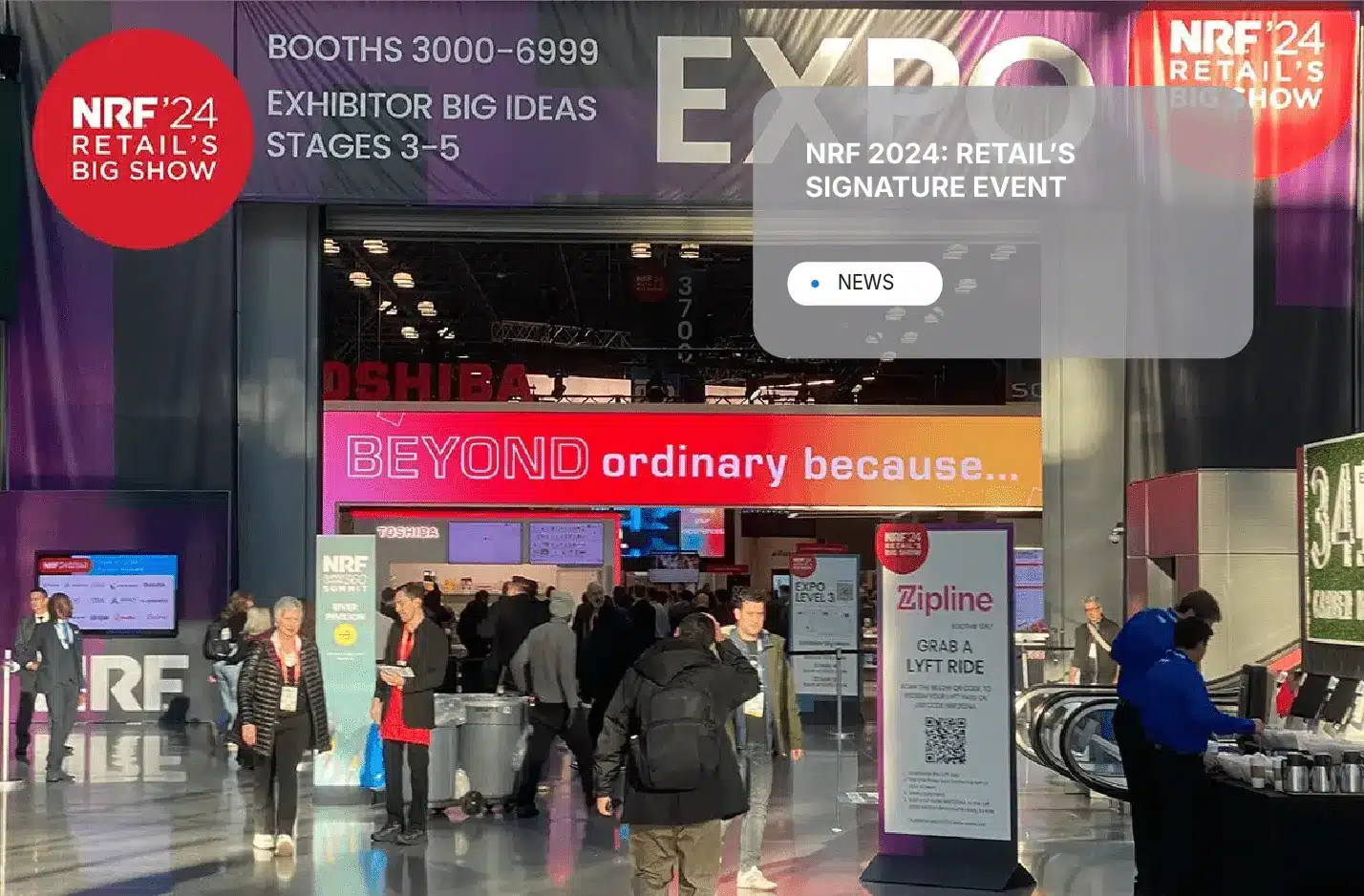
Retail’s flagship event takes place in NYC from January 14-16. Clustag will attend the NRF 2024, to connect with industry leaders and show how RFID can support retail goals.
Connect with us
We would like to share with you our RFID intralogistics solutions at the show, and go deeper in why our technology increases the productivity and efficiency of warehouses with a 100% reliability and accuracy. In addition, we will have the chance to discuss not only the advantages that RFID offers in the point of sales, but also about how the warehouse processes become more efficient using it. We will be more than happy to attend your doubts and questions, and also work with you to determine which solutions suit better your demands.
If you want to discuss things more in depth, do not hesitate to contact ushere.
Sensormatic
Sensormatic Solutions is a global leader in retail solutions from Johnson Controls, powering safe and seamless shopping experiences. With more than 60 years of experience, it delivers an interconnected ecosystem of loss prevention, inventory intelligence, and traffic analytics, transforming data into actions that shape the future of retail.
Malipo is a Mexican integrator specialized in in‑store inventory management, loss prevention, and security, using AI to enhance the shopping experience and increase sales. Clustag complements their scope by providing RFID solutions for back‑of‑store and warehouse operations, covering the end‑to‑end operational flow.
QodeNext is a leading provider of supply chain traceability and automation technologies. With over 25 years of experience, they deliver integrated solutions using Barcode, RFID, Vision, IoT and advanced analytics to enable end‑to‑end visibility and improve operational efficiency.
Conveyor Logistics specializes in providing innovative material handling and warehouse automation solutions. With a passion for excellence and a commitment to customer satisfaction, they have become a trusted partner for businesses seeking to optimize their operations.
Omnisint is a technology company specialized in implementing highly innovative solutions for the retail market and beyond. Its mission is to identify and deliver innovative, sustainable, and reliable technologies to its clients. Omnisint is a continuously growing organization that counts among its established customers some of the leading international brands and retailers.
At Times-7, they design and manufacture high-performance RAIN RFID antennas that deliver trusted accuracy, reliability, and RF excellence. Based in New Zealand and supported by a global distribution network, their antennas power mission-critical applications across retail, healthcare, logistics, manufacturing, and more.
Clustag collaborates with ITI, a Technological Center for Research, Development and Innovation in Information and Communication Technologies (ICT). As part of REDIT and FEDIT, ITI develops advanced technological solutions aimed at improving industrial competitiveness and fostering a smarter, more sustainable society. This partnership supports Clustag’s commitment to innovation in RFID and IoT for logistics, traceability, and digital transformation.
The National Innovation and Sustainability Cluster located in Ontinyent, is an organisation that adds value to its member companies as it was created with a focus on innovation, business cooperation and internationalisation.
The Vall d’Albaida Business Confederation (COEVAL) was created at the end of 1996 with the basic objective of uniting the efforts of the different sectoral organisations and companies based in the region.
The Spanish Logistics Centre is the national reference association for supply chain management in Spain. Focused on providing value to its members through knowledge and innovation in logistics management. CLUSTAG is part of this group that promotes automation in Spain.
Collaborating in research with the Institute of Telecommunications and Multimedia Applications of the Universitat Politècnica de València implies a relationship focused on research and technological innovation allowing Clustag to develop joint R&D projects, access to specialised knowledge in telecommunications and multimedia applications and support technical training through participation in conferences, collaboration in research and access to advanced laboratories.
Being a collaborating partner of EDEM Business School means that Clustag actively participates in the business training and entrepreneurship ecosystem that EDEM promotes by offering its experience in RFID technology and logistics in training programmes, connecting with young talent
National Retail Federation has represented the retail trade for more than a century in the USA. They are passionate advocates for the people, policies and ideas that help retail thrive. At Clustag we know that the automation of warehouse operations must go hand in hand with the retail sector, so we are pleased to support and share our knowledge with NRF members.
MHI is the largest materials handling, logistics and supply chain association in the US, working to provide the latest advancements, the strongest industry and technology relationships, powerful leadership in the automation sector and the best market access for manufacturing and supply chain professionals.
The RAIN Alliance is a global non-profit organization that promotes the widespread adoption of RAIN RFID technology around the world. Founded in 2014, the alliance brings together more than 160 companies from the RFID ecosystem, including hardware manufacturers, software developers, system integrators, and end users. The name RAIN stands for “RAdio frequency IdentificatioN” and symbolizes the connection between data from the physical world and digital systems through UHF RFID technology.
Lenze is a leader in automation and motion control solutions offering innovative technology for the optimisation of industrial machinery. Its product range includes servo drives, servo motors and control systems that improve efficiency, flexibility and connectivity in automated production environments.
Leuze is a company specialising in sensors and detection systems for industrial automation providing advanced solutions in security, identification and process control. Its products include optical sensors, code readers and measurement technology designed to guarantee maximum precision, reliability and safety in the most demanding production environments.
Cognex is a leading company in machine vision and industrial identification specialising in the development of intelligent camera systems and advanced sensors that optimise automation processes in industrial environments. Its solutions enable recognition and quality control on production lines ensuring greater precision, efficiency and error reduction.
Rolling On Interroll is a strategic, long-term initiative of the worldwide Interroll Group. It is tangible proof of the company’s strategic positioning as strong partner for system integrators and OEMs around the globe.
Zebra is committed to empowering teams with the mobility and insight needed to operate at the cutting edge of excellence. Beyond simply providing intelligent hardware, Zebra delivers solutions that offer organizations complete visibility, enabling smart, agile decision-making — both in the moment and for future planning.
ClarityRFID is a global business and branding solutions provider, a testimony of 35+ years of vision and innovation. From its start in 1985 as a label and accessories provider to its position today as a worldwide leader in item-level RFID solutions, ClarityRFID have remained committed to continuous innovation, sustainability, and value-driven solutions for unique brand needs.
Impinj helps partners virtualize, analyze, and optimize businesses by wirelessly connecting everyday things to the Internet. The Impinj Partner Network program offers training, technical support, and marketing and sales resources that empower us to build connections and grow business.
STC Retail. RFID projects are implemented to improve inventory management accuracy, enhance the shopping experience, and reduce theft in stores and warehouses. Thanks to the collaboration with Clustag, these solutions also enable real-time traceability, greater operational efficiency, and data-driven decision-making tailored to the needs of the retail sector.
Terso Solutions is a U.S.-based company specialized in RFID solutions for inventory management in critical environments such as healthcare and pharmaceuticals. Its technology enables secure, connected devices to control high-value products at the point of use.
Its mission is to free professionals from administrative tasks, allowing them to dedicate more time to healthcare and scientific work.